
Desserts
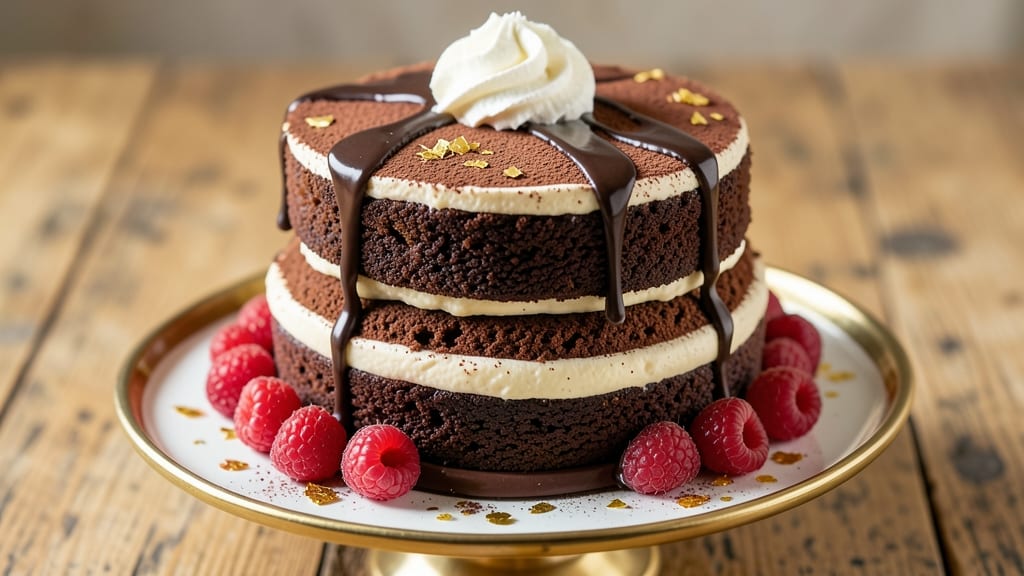
This Austrian tea cake recipe delivers the perfect balance of buttery richness and crunchy almond perfection you crave. 💛 The secret lies in its layered structure—moist chocolate sponge sandwiched between delicate almond paste and topped with that signature chocolate glaze.
I've perfected the technique over years of baking, ensuring every bite delivers that iconic Sachertorte experience at home.
What sets these tea cakes apart is the combination of textures: tender chocolate cake, crisp almond paste, and a glossy chocolate finish that melts beautifully. The recipe uses simple ingredients you likely already have—a rich chocolate sponge base, homemade almond paste, and a velvety chocolate glaze.
This method preserves the traditional Austrian technique while making it accessible for home bakers.
The result is a cake that's elegant enough for special occasions but simple enough for everyday indulgence. Each slice offers that perfect harmony of flavors and textures—moist chocolate layers, nutty almond crunch, and a glossy finish that makes every bite irresistible.
The aroma alone will transport you to Vienna's historic cafés.
Whether you're serving this classic dessert at a dinner party or treating yourself to a luxurious afternoon tea, these tea cakes will impress. The recipe includes traditional methods with optional modern variations, so you can adapt it to your preferences while maintaining that authentic Austrian charm. Let's get baking!
Ingredients for austrian tea cake
Twelve essential ingredients crafting the iconic Sachertorte experience at home.
| Ingredient | Amount | Notes |
|---|---|---|
| All-Purpose Flour 🌾 | 2 ½ cups | Sifted for light texture |
| Unsalted Butter 🧈 | 1 ½ cups | Cold, cubed for sponge |
| Granulated Sugar 🍚 | 2 cups | Superfine preferred for smoothness |
| Cocoa Powder 🍫 | ½ cup | Natural, unsweetened |
| Large Eggs 🥚 | 4 whole | Room temperature for blending |
| Vanilla Extract 🌿 | 2 tsp | Pure Madagascar preferred |
| Almond Paste 🥜 | 2 cups | Homemade or store-bought |
| Ground Almonds 🌰 | 1 cup | For almond paste texture |
| Powdered Sugar 🍚 | 1 cup | For almond paste sweetness |
| Dark Chocolate 🍫 | 8 oz | 70% cacao, chopped fine |
| Heavy Cream 🥛 | ½ cup | For chocolate glaze |
| Baking Powder 🧂 | 1 tsp | For sponge lift |
| Salt 🧂 | ¼ tsp | Fine sea salt |
| Almond Extract 🌿 | ½ tsp | For almond flavor depth |
The foundation begins with high-quality cocoa powder—look for natural, unsweetened varieties like Dutch-processed Valrhona or Ghirardelli for that authentic Austrian depth. Unsalted butter matters here; European-style brands like Plugrá or Kerrygold deliver superior flavor, but any good-quality unsalted butter works. For the almond paste, homemade is ideal—blend ground almonds, powdered sugar, and egg whites until smooth—but store-bought (like Nutiva or Anthony's) saves time without sacrificing texture. The dark chocolate should be 70% cacao or higher—Lindt Excellence or Callebaut are excellent choices for that velvety glaze. Pre-sift your flour and cocoa to avoid dense layers, and measure your ingredients by weight if possible for precision.
No vanilla extract? Pure vanilla bean paste works beautifully, or even vanilla bean seeds scraped fresh for that authentic aroma. Substituting almond extract? Marzipan can replace almond paste in a pinch, though texture will differ slightly. For the chocolate glaze, heavy cream is non-negotiable—it creates that signature glossy finish. Coconut cream can replace it, but the flavor profile shifts. If you're short on ground almonds, blend whole almonds in a food processor, but toast them first for enhanced flavor. The baking powder should be fresh—old powder loses its lift. For a modern twist, swap half the almond paste for crushed pistachios or hazelnuts while keeping the same ratio of sweetener.
Store the chocolate sponge layers between parchment paper in an airtight container for up to 3 days at room temperature, though they're best enjoyed fresh. The almond paste keeps well in the fridge for up to 1 week or frozen for 3 months—just thaw before assembling. The glaze should be used immediately or stored in the fridge for up to 5 days, rewarmed gently before drizzling. For make-ahead convenience, bake the sponge and almond paste separately, then assemble and glaze just before serving. The full cake holds for 2 days in the fridge, covered tightly, but tastes best within 24 hours for optimal texture and flavor.
Why You'll Love This Recipe
- No Mixer Needed: I swear by this—just cream butter and sugar by hand until it’s light, then fold in the cocoa and eggs. The dough comes together in minutes, no stand mixer required.
- Rich Chocolate Hug: That cocoa powder isn’t just an afterthought—it’s the star. The butter melts into the flour, creating a tender crumb with a deep, velvety chocolate flavor that’s dangerously easy to overbake for.
- Crowd-Pleaser Basics: Serve it warm with tea for an afternoon pick-me-up, slice it for a school lunch, or pack it in a tin for a coffee break. Honestly, it’s the one dessert I make that everyone asks for seconds on.
- Budget-Friendly Indulgence: All-purpose flour, butter, sugar—these are pantry staples you already own. The recipe stretches to feed six, and leftovers? They taste just as good reheated the next day. My wallet and my taste buds thank me.
Step-by-step instructions for Austrian tea cakes
Here's how to craft these delicate almond-infused cakes with perfect texture and flavor.
👨🍳 Step 1: Prepare the Almond Paste Mixture
In a medium bowl, combine the 2 cups almond paste, 1 cup ground almonds, and 1 cup powdered sugar. Add the 0.5 tsp almond extract and mix thoroughly with a silicone spatula until completely smooth. This mixture forms the signature almond flavor base that distinguishes Austrian tea cakes.
I like to press the mixture through a fine-mesh sieve to eliminate any lumps—this ensures a silky texture in the final cakes. The almond paste should be completely homogeneous before proceeding. Set this mixture aside as you prepare the sponge batter.
👨🍳 Step 2: Create the Sponge Batter
In a stand mixer fitted with the paddle attachment, beat the 1.5 cups unsalted butter (cold and cubed) with the 2 cups granulated sugar on medium speed for 3-4 minutes until light and fluffy. This creaming process is crucial—it incorporates air that will create those signature tender layers.
Add the 4 whole large eggs one at a time, mixing well after each addition until fully incorporated. Then add the 2 tsp vanilla extract and mix for another 30 seconds. In a separate bowl, whisk together the 2.5 cups all-purpose flour, 0.5 cup cocoa powder, 1 tsp baking powder, and 0.25 tsp salt. Gradually add the dry ingredients to the wet mixture on low speed, mixing just until combined.
🥘 Step 3: Combine and Divide the Batter
Gently fold the almond paste mixture into the sponge batter using a spatula, being careful not to overmix. The batter should be thick but smooth, with no visible streaks of almond paste. Transfer the batter to a piping bag fitted with a star tip (or a plastic bag with a small corner snipped off).
Pipe 12 equal-sized mounds (about 2 tablespoons each) onto a parchment-lined baking sheet, spacing them about 2 inches apart. The cakes should be slightly rounded but not overly tall—this ensures even baking and proper texture. I find using a kitchen scale for portioning gives the most consistent results.
🔥 Step 4: Bake to Golden Perfection
Preheat your oven to 350°F. Bake the cakes for 12-15 minutes until the edges are golden brown and the tops spring back when gently pressed. The centers should still appear slightly underdone—they'll continue cooking as they cool.
Real talk: Don't overbake these cakes. They should be tender with just a hint of firmness in the center. If you bake them too long, they'll become dry and lose that signature Austrian tea cake texture. Let them cool on the baking sheet for 5 minutes before transferring to a wire rack.
🍫 Step 5: Prepare the Chocolate Glaze
While the cakes cool, prepare the chocolate glaze by combining the 8 oz dark chocolate (chopped fine), 0.5 cup heavy cream, and 1 tablespoon granulated sugar in a heatproof bowl. Place the bowl over a pot of simmering water and stir until the chocolate and cream melt completely, creating a smooth glaze. Remove from heat and let cool slightly.
Once the cakes are completely cool, dip the bottom half of each cake into the chocolate glaze, allowing any excess to drip off. Place them back on the parchment-lined baking sheet and let the glaze set for 10 minutes before serving. The contrast between the tender almond cake and rich chocolate glaze is what makes these tea cakes truly special.
Pro Tips For Making Austrian Tea Cake
- MEASURE COCOA PRECISELY: Austrian tea cake relies on that deep chocolate flavor, so don’t eyeball the cocoa powder—use a kitchen scale for 28g (about 3 tablespoons) of unsweetened cocoa. I learned this the hard way; sweetened cocoa makes the cake taste off and too dense. Sift it first too—lumps ruin the texture.
- CREAM BUTTER AND SUGAR UNTIL PALE: Beat the butter and sugar until it’s light and pale yellow, not just fluffy. This takes 3-5 minutes with a stand mixer—yes, even if your arms ache. The extra air keeps the cake tender, and that pale color means proper emulsification. Skip this, and you’ll get a cake that’s more like a brick.
- DON’T OVERMIX THE BATTER: Once you fold in the flour, stop mixing the second it’s just combined. Overmixing develops gluten, and this cake is supposed to be soft, not chewy. Give it 10-12 strokes max with a spatula—your future self will thank you when you sink your teeth into a slice that doesn’t fight back.
- LET THE BATTER REST 10 MINUTES: After mixing, let the batter sit for 10 minutes before baking. This relaxes the flour and helps the eggs distribute evenly, giving you a cake with a finer crumb. I was skeptical until I tried it—now it’s non-negotiable for me. Preheat the oven while you wait; no point in killing two birds with one stone.
Storing and reheating this dish
Room-Temp Storage
Store your freshly baked Austrian tea cakes at room temperature in an airtight container for up to 2 days. I use clear plastic containers with tight-sealing lids from Rubbermaid—they keep the cakes fresh while letting you admire their chocolate-dipped beauty.
Place parchment paper between layers to prevent sticking, and avoid stacking too high to maintain shape. The almond flavor actually develops more complexity overnight, making them taste even better the next day. 💛
Fridge Preservation
For longer storage, refrigerate the tea cakes in the same airtight container for up to 5 days. The cold slows down moisture loss, preserving that perfect almond-chocolate balance. Let them sit at room temperature for 15-20 minutes before serving to restore texture—cold cakes can feel dense.
I like to wrap individual cakes in parchment paper before storing to prevent them from sticking together. The chocolate glaze stays glossy and firm in the fridge, making them look as good as they taste.
Freezing Technique
Freeze your tea cakes for up to 3 months by wrapping each one individually in plastic wrap, then placing them in a freezer bag with all air removed. I use Ziploc Freezer Bags—they're durable and prevent freezer burn. Thaw overnight in the fridge before serving.
The texture remains delightfully tender when reheated properly, though the glaze may soften slightly. For best results, reheat individual cakes in the microwave for 10-12 seconds on medium power to restore the glaze's sheen and warmth.
Reheating Methods
For a quick refresh, pop individual cakes in the microwave for 8-10 seconds on low power—just enough to warm through without drying out. Alternatively, place them on a baking sheet and warm in a preheated 300°F oven for 5-7 minutes for even heating.
The oven method works best for maintaining that signature almond-chocolate harmony. Avoid high heat—it can make the glaze melt too quickly or cause the cakes to become rubbery. A toothpick test helps: insert it into a cake; if it comes out clean, it's ready to serve.
Glaze Refresh
If your glaze looks dull after storage, simply reheat the chocolate glaze mixture gently in a double boiler until smooth, then drizzle over the cakes. The heat reactivates the glaze's shine and stickiness. For extra shine, add 1 tsp heavy cream to the reheated glaze—it helps restore that glossy finish.
I find this works particularly well for cakes that have been frozen and thawed. The contrast between the warm cake and glossy glaze makes every bite feel special, just like in a Vienna café. ✨
Nutrition facts
Frequently asked questions
Can I make these Austrian tea cakes without almond paste?
For a quick substitute, blend 1 cup ground almonds with 1 cup powdered sugar and 1 egg white until smooth. This homemade version works just as well—just press it through a fine-mesh sieve for that signature silky texture. The flavor will be slightly less refined but still delicious. For extra richness, add 0.5 tsp almond extract to the mixture.
Why do my Austrian tea cakes turn out dense instead of light?
Overmixing the batter or overbaking are the most common culprits. The sponge should be folded gently with the almond paste—don't stir vigorously. Also, bake until the edges are golden but the centers still look slightly underdone (they'll firm up as they cool). If your oven runs hot, reduce the temperature by 25°F and check for doneness at 10 minutes. A toothpick test helps: it should come out with a few moist crumbs, not wet batter.
What's the best way to serve these tea cakes?
These cakes shine best served at room temperature with a dusting of powdered sugar and a side of freshly brewed Earl Grey tea or Viennese coffee. For a showstopping presentation, arrange them on a tiered cake stand with fresh berries or edible flowers. The chocolate glaze pairs beautifully with whipped cream or a dollop of vanilla bean ice cream. In Austria, they're often served with a slice of butter on the side—worth trying for authenticity!
Can I make these gluten-free?
Yes, with a few adjustments! Replace the all-purpose flour with a 1:1 gluten-free baking flour blend (like Bob's Red Mill) and add 0.5 tsp xanthan gum to improve texture. For the almond paste, ensure your ground almonds are certified gluten-free. The chocolate glaze remains unchanged. Keep in mind the texture will be slightly denser than traditional versions, but the flavor stays rich and satisfying. Always check your ingredients for hidden gluten sources.
How do I prevent the chocolate glaze from melting too quickly?
Work quickly when dipping the cakes—keep the glaze at room temperature (not warm) and dip only the bottom half for 2-3 seconds. Place them on a wire rack in a cool spot while the glaze sets. For extra stability, chill the cakes for 10 minutes in the fridge before serving. If your kitchen is very warm, consider using white chocolate instead—it has a higher melting point. The glaze should firm up within 15-20 minutes at room temperature.