
Desserts
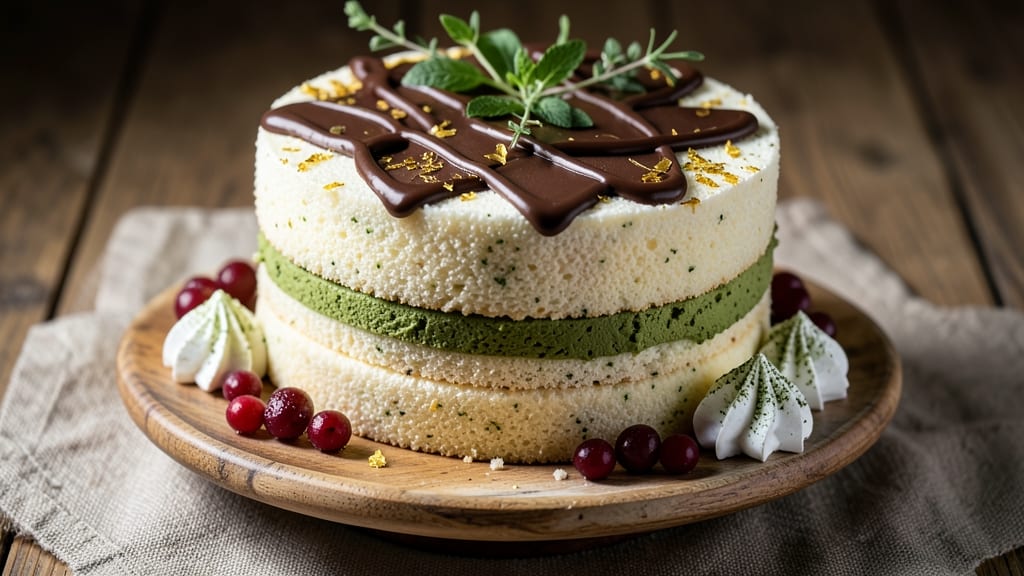
This Asian-style sponge cake delivers light, airy layers with a delicate matcha twist—perfect for celebrations or quiet afternoons. 💛 The secret lies in precise egg separation and gentle folding, creating a texture so tender it practically melts in your mouth.
I’ve refined this recipe over years, balancing traditional techniques with modern convenience for foolproof results every time.
What sets this cake apart is its Japanese-inspired structure, where each layer stays moist without being dense. The matcha adds a subtle earthiness that pairs beautifully with buttercream or fresh fruit.
Unlike heavy Western sponges, this version relies on high-ratio cake flour and careful baking to achieve that signature lift and crisp edges.
By the time it emerges from the oven, you’ll have a cake with golden, crackly layers that separate effortlessly. The matcha-infused glaze adds a sophisticated touch, while the interior remains impossibly soft. It’s the kind of dessert that feels both elegant and comforting—ideal for birthdays, tea gatherings, or simply indulging.
For extra flair, top with whipped cream or berries. The recipe scales easily, so you can adjust layers for any occasion. Let’s get baking!
Ingredients for asian style sponge cake
These twelve ingredients create a delicate Asian-style sponge with matcha's earthy elegance—perfect for celebrations.
| Ingredient | Amount | Notes |
|---|---|---|
| Large Egg Whites 🥚 | 8 whole | Room temperature, separated carefully |
| Large Egg Yolks 🥚 | 4 whole | Room temperature, separated carefully |
| Granulated Sugar 🍚 | 1 ½ cups | Superfine preferred for smoothness |
| Cake Flour 🌾 | 2 cups | High-ratio, sifted before use |
| Unsalted Butter 🧈 | 1 cup | Cold, cubed, European preferred |
| Matcha Powder 🍵 | 2 tbsp | Ceremonial grade, vibrant green |
| Vanilla Extract 🌿 | 1 tsp | Pure Madagascar preferred |
| Baking Powder 🧂 | ½ tsp | Diamond Crystal preferred |
| Salt 🧂 | ¼ tsp | Fine sea salt preferred |
| Powdered Sugar 🍚 | 1 cup | For glaze, sifted smooth |
| Heavy Cream 🥛 | ½ cup | Cold, for glaze stability |
| Lemon Juice 🍋 | 1 tbsp | Freshly squeezed, for glaze |
The egg whites are non-negotiable here—room temperature is critical for proper volume. I always use Pillsbury cake flour for its high protein content, which gives that signature tender crumb. For matcha, Ippodo Tea's ceremonial grade is my go-to—anything less vibrant will taste bitter. The butter should be cold and cubed; European-style brands like Plugrá melt more cleanly. Sift your dry ingredients together to avoid dense layers, and don't skip the superfine sugar—it dissolves better for silky texture.
No matcha? Substitute 1 tbsp instant espresso powder for a similar depth, though the flavor won't be identical. Running out of cake flour? All-purpose flour plus 2 tbsp cornstarch works in a pinch. For the glaze, powdered sugar from Wholesale Sugar dissolves more smoothly than generic brands. The heavy cream should be very cold—warm cream will curdle your glaze. If you're short on time, pre-whipped cream (like Reddi-wip) can replace the glaze entirely for a quick finish.
Store the cake layers wrapped in plastic between parchment paper for up to 3 days—they'll stay moist but not soggy. The glaze can be made a day ahead and reheated gently with a splash of milk if it thickens. For best results, assemble the cake 2 hours before serving—this gives the layers time to meld without losing their structure. Freeze unassembled layers for up to 1 month; thaw overnight in the fridge before decorating.
Why You'll Love This Recipe
- No Mixer Needed: I’ll be real—this sponge only requires a whisk and your arm strength. Those egg whites? They fluff up like magic with just a few minutes of elbow grease, no stand mixer required. (My tiny kitchen counter proves it.)
- Butter-Soft Magic: That rich, velvety texture? All thanks to the butter folded into the yolks and flour. It’s not just fluffy—it’s ridiculously tender, with just enough structure to hold a fork. Honestly, it’s the kind of cake that makes you pause mid-bite.
- Leftovers? Best Part: This cake keeps beautifully for days, and honestly, it’s even better the second time around. Slice it for breakfast with tea, pack it in lunches, or freeze slices for lazy mornings. (Yes, even on a Tuesday night.)
- Five-Ingredient Flex: You’re basically making cake with pantry staples—no fancy extracts or specialty flours here. The sugar caramelizes just enough to add depth, while the egg whites give that signature lightness. Budget-friendly? Absolutely. Impressive? Even more so.
Step-by-step instructions for Asian style sponge cake
Here's how to create those signature light, airy layers with a delicate matcha whisper throughout.
👨🍳 Step 1: Whip Egg Whites to Stiff Peaks with Precision
Begin by separating the 8 whole large egg whites from the 4 whole large egg yolks carefully, ensuring no yolk traces contaminate the whites. In a spotless, grease-free bowl, whip the egg whites on medium speed until soft peaks form. Gradually add ½ cup of the 1.5 cups granulated sugar while whipping continuously.
Increase speed to high and whip for 3-4 minutes until the meringue is glossy and holds stiff peaks that stand straight when the whisk is lifted. This step is critical—under-whipped meringue collapses, while over-whipped meringue loses volume. You'll know it's perfect when the bowl feels cool to touch and the peaks hold their shape without flattening.
👨🍳 Step 2: Fold in Yolks and Butter for Silky Texture
In a separate bowl, combine the 4 whole large egg yolks with the remaining 1 cup granulated sugar and whip on medium speed until pale and thickened (2-3 minutes). Gently fold this yolk mixture into the stiffly whipped egg whites using a spatula, working in three additions to maintain airiness.
Next, add the 1 cup cold cubed unsalted butter in small increments, folding just until fully incorporated. Be gentle—this is where the cake's delicate structure forms. The butter should melt slightly but not dissolve completely. In a separate bowl, whisk together 2 cups cake flour, 2 tbsp matcha powder, 0.5 tsp baking powder, and 0.25 tsp salt. Sift this dry mixture over the batter and fold in using the "J" technique until just combined—no flour streaks remain.
🍳 Step 3: Bake in Layers for Maximum Height
Preheat your oven to 350°F and grease three 8-inch round cake pans lightly with butter, then dust with cake flour. Divide the batter evenly among the pans, spreading each layer to the edges for even baking. Bake for 12-15 minutes until the edges pull away from the pan and a toothpick inserted comes out clean.
Real talk: Asian sponge cakes rely on precise baking time. If the oven runs hot, check at 10 minutes. If it's cool, extend to 18 minutes. The cake should spring back when pressed gently—no jiggling. Let the layers cool in the pans for 5 minutes before transferring to a wire rack to cool completely.
🥘 Step 4: Assemble with Matcha Cream Filling
In a mixing bowl, combine 0.5 cup heavy cream, 1 cup powdered sugar, 2 tbsp matcha powder, 1 tsp vanilla extract, and 1 tbsp lemon juice. Whip on medium speed until smooth and fluffy (2-3 minutes). This vibrant green filling is the heart of your cake—don't skip the lemon juice, it brightens the flavor.
Place the first cake layer on a serving plate, spread half the filling evenly, then add the second layer. Repeat with remaining filling and top layer. Dust the top lightly with additional matcha powder for that signature aesthetic. Let the cake set for 1 hour before slicing—this ensures clean layers and prevents crumbling.
Pro Tips For Making Asian Style Sponge Cake
- Whip Whites to Stiff Peaks: Use a clean, grease-free bowl and beat the egg whites on medium-high until they hold a peak that doesn’t wobble—like a stiff meringue. I learned this the hard way: underwhipped whites = dense cake, and no one wants that. (Yes, even if you’re impatient like me.)
- Melt Butter Slowly: Warm the butter in a bowl over barely simmering water (double boiler) until just melted—not microwaved or boiled. Cold butter lumps up in the batter, and hot butter can scramble the yolks when mixed. Sounds weird, but it works: the cake stays light and fluffy.
- Sift Flour Twice: Sift the cake flour once into the bowl, then sift it again through a fine-mesh sieve before folding it in. That extra step cuts out clumps, which are the enemy of a silky texture. I skip this when I’m lazy, but the difference is noticeable—especially in Asian-style cakes where density matters.
- Room Temperature Eggs: Let the eggs sit in warm water (not boiling) for 10 minutes before separating. Cold yolks can turn grainy when whipped, and cold whites won’t hold peaks as well. (Your future self will thank you—trust me, I’ve made the sad, flat cake mistake.)
Storing and reheating your asian style sponge cake
Room-Temp Storage
Store your fully assembled cake in an airtight container at room temperature for up to 2 days. I wrap mine in plastic wrap first, then place it in a Pyrex glass container with a tight lid.
The matcha filling keeps beautifully without drying out, and the layers stay perfectly separated. For extra protection, place a paper towel between layers to absorb any moisture—this prevents sogginess. 💛
Fridge Preservation
Extend freshness by refrigerating for up to 5 days. Place the cake in the coldest part of your fridge (usually the back shelf) and cover it with parchment paper before sealing in an airtight container.
The cold helps preserve the buttercream filling, but let the cake sit at room temperature for 30 minutes before serving to restore its ideal texture. I always check for condensation inside the container—if present, pat dry with a paper towel before serving.
Freezer-Friendly Layers
Freeze unassembled cake layers individually, wrapped in plastic wrap and placed in a freezer bag with all air squeezed out. They’ll keep for 1 month without losing moisture. When ready to assemble, thaw overnight in the fridge.
For the glaze, freeze it separately in an ice cube tray—thaw quickly under warm water and whisk to restore smoothness. Pro tip: Freeze the matcha cream filling in 1-tbsp portions for easy layering later. ❄️
Reheating Tricks
If your cake develops a slightly dry crust from storage, revive it by placing the entire cake in a 200°F oven for 5-7 minutes. This gently warms the layers without overcooking. For the glaze, reheat it in 10-second bursts in the microwave, stirring between each interval.
If the glaze thickens, thin it with 1 tsp milk at a time. I avoid the microwave for the cake itself—it can make the layers gummy. A steam bath (place cake on a rack over simmering water) works wonders for restoring moisture without drying out the filling.
Serving After Storage
Always let stored cake sit at room temperature for 15-20 minutes before slicing. This allows the layers to relax and prevents crumbling. For a restaurant-quality finish, dust with extra matcha powder or garnish with edible gold leaf before serving.
If you froze the layers, assemble the cake 2 hours before serving—this gives the filling time to meld with the layers while keeping the structure intact. Trust me, the wait is worth it for that perfect slice. ✨
Nutrition facts
Frequently asked questions
Why does this recipe use cake flour instead of all-purpose?
Cake flour creates the signature tender, delicate texture of Asian sponge cakes. It has a lower protein content (7-9%) compared to all-purpose flour (10-12%), which prevents a tough crumb. The recipe also includes 2 tbsp cornstarch if substituting—this mimics cake flour's fine texture and moisture absorption. Never skip this swap for that melt-in-your-mouth result!
Can I make this cake without matcha powder?
For a neutral version, simply omit the matcha and reduce the flour by 2 tbsp. For flavor variations, try 1 tbsp instant espresso powder—it adds depth without bitterness. Or swap for 1 tsp vanilla bean paste for a floral twist. The key is maintaining the cake's airy structure—matcha just enhances it.
How do I know when the egg whites are perfectly whipped?
Look for stiff peaks—when you lift the whisk, the meringue should form a sharp point that stands straight. The bowl should feel cool to the touch, and the meringue should be glossy with no graininess. Tap the whisk against the bowl—if the meringue holds its shape without collapsing, it's ready. Over-whipping (past 5 minutes) adds webbing, which ruins the cake's structure.
What's the secret to getting clean cake layers?
Let the cake cool completely—at least 2 hours—before slicing. Use a serrated knife and dip it in hot water between each cut to prevent crumbling. For extra insurance, chill the cake in the fridge for 30 minutes—the cold helps the layers set. Never force it—patience ensures those perfect, clean slices every time.
Can I bake this in a different pan size?
Yes, but adjust the batter quantity. For 6-inch pans, divide the batter into 5 layers (use ⅘ of the total batter). For 9-inch pans, reduce to 2 layers (use ⅔ of the batter). Bake times vary: 6-inch pans need 15-18 minutes, while 9-inch pans may require 20-25 minutes. Always check with a toothpick—it should come out clean.