
Desserts
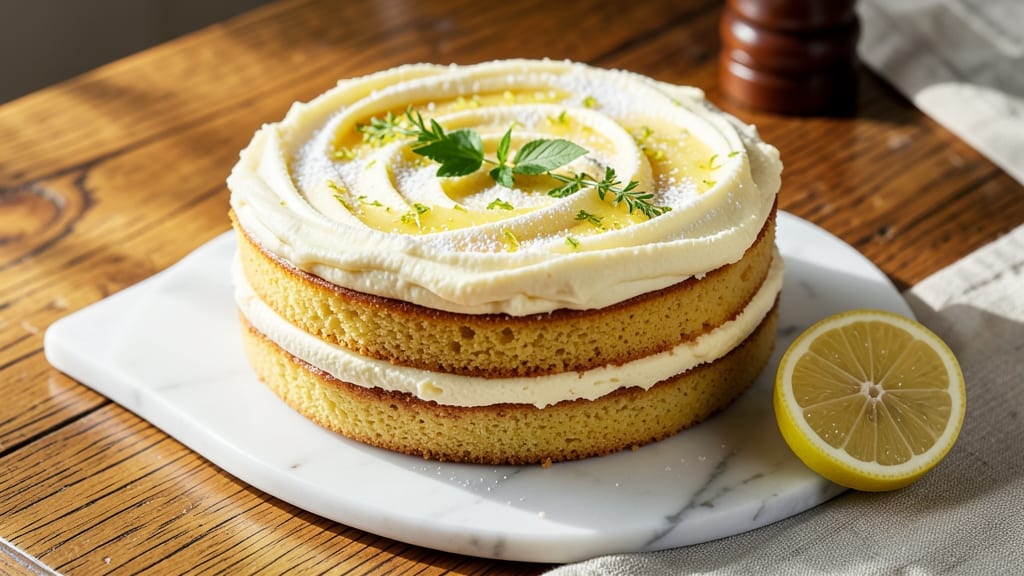
Anna Olson’s lemon cake recipe delivers bright, moist layers with a buttery crust that’s become my go-to for any celebration. 💛 The secret lies in balancing zesty lemon with just enough sweetness—no dry crumbs here. I’ve perfected this version after years of baking, ensuring every slice stays tender and flavorful.
What makes this recipe special is the two-step baking process: a golden crust forms first, then the lemon filling sets perfectly underneath. The crust alone is worth the effort—flaky, buttery, and just sweet enough to complement the tangy lemon. No fancy techniques required, just precise measurements and patience.
By the time you slice into this cake, you’ll taste juicy lemon curd between layers of soft, buttery sponge. The aroma alone will have everyone gathering in the kitchen, and the texture? Pure perfection—moist enough to feel indulgent, but light enough to eat without guilt.
Serve with whipped cream or a dusting of powdered sugar for a classic touch. Here’s how to bake it like Anna Olson herself would.
Ingredients for anna olson lemon cake
The secret to Anna's legendary lemon cake: buttery crust meets zesty lemon filling—no dry crumbs allowed.
| Ingredient | Amount | Notes |
|---|---|---|
| All-Purpose Flour 🌾 | 3 cups | Sifted for fluffy texture |
| Unsalted Butter 🧈 | 1 ½ cups | Cold, cubed for crust |
| Granulated Sugar 🍚 | 2 cups | Superfine preferred |
| Powdered Sugar 🍚 | 1 cup | For dusting layers |
| Fresh Lemon Juice 🍋 | 1 cup | From 4-5 lemons |
| Lemon Zest 🍋 | ½ cup | Finely grated, no pith |
| Large Eggs 🥚 | 4 whole | Room temperature |
| Baking Powder 🧂 | 1 ½ tsp | Diamond Crystal preferred |
| Salt 🧂 | ½ tsp | Fine sea salt |
| Vanilla Extract 🌸 | 1 tsp | Pure vanilla |
| Heavy Cream 🥛 | ½ cup | Cold for lemon curd |
| Egg Yolks 🥚 | 2 whole | Separated from whites |
| Cornstarch 🌾 | 1 tbsp | For smooth curd |
The butter makes or breaks this crust. European-style butter like Plugrá or Land O'Lakes has more fat content, which gives that signature flakiness. Grab it from Whole Foods or the dairy section of your grocery store—just make sure it's cold when you measure it. The flour? King Arthur or Gold Medal are reliable, but sift it first or you'll end up with dense layers. Fresh lemons are a must for zest—organic is best since you're using the peel. If you can't find organic, wash the lemons thoroughly and remove all the bitter white pith. The powdered sugar? Confectioners' sugar works too, but it has a slightly coarser texture.
No fresh lemons? Bottled lemon juice works in a pinch, but it lacks that bright, fresh flavor. Running out of vanilla? Almond extract at half the amount gives a similar sweetness, though the flavor profile shifts slightly. The baking powder is non-negotiable—Diamond Crystal is my go-to because it's lighter than double-acting brands. For the lemon curd, if you don't have cornstarch, arrowroot powder at the same amount will thicken it just as well. And trust me on the egg yolks—they're what give the curd that signature silky texture. Don't skip them for whites, even if you're watching calories.
This cake keeps beautifully—3 days at room temperature covered with a cake dome, or 1 week refrigerated in layers separated by parchment. The lemon curd layer? Freezes for 3 months if you wrap it tightly in plastic. I always bake and assemble the cake a day ahead—it gives the flavors time to meld and makes slicing a breeze. Store any leftovers in an airtight container with a slice of lemon on top to keep it fresh. The crust stays crisp for days if you keep it dry, but the filling? Best eaten within 2 days for maximum moisture.
Why You'll Love This Recipe
- No Fuss Mixing: I swear by this recipe because it’s just flour, butter, sugar, and lemon—no weird substitutions or last-minute grocery runs. The batter comes together in one bowl, and honestly? That’s half the battle won right there.
- Bright Tangy Magic: That fresh lemon juice doesn’t just add flavor—it makes the whole cake sing. The buttercream? Rich enough to satisfy, but the citrus cuts through it like a cool breeze. (Yes, even on a Tuesday night.)
- Leftovers That Last: Slice it, wrap it, and stash it in the fridge for days. The lemon keeps it fresh, and the powdered sugar frosting means you can dust it up for breakfast, dessert, or a last-minute snack—no one will guess it’s been sitting there.
- Budget Bright Spot: Butter and flour are pantry staples, and a single lemon stretches for multiple batches. I’ll be real: this is the kind of cake that makes me feel fancy without breaking the bank—especially when I’m feeding a crowd.
Step-by-step instructions for Anna Olson's lemon cake
Here's how to create layers of zesty lemon perfection with that signature buttery crust.
👨🍳 Step 1: Make the Lemon Curd Filling
In a medium saucepan, combine the 1 cup fresh lemon juice, 0.5 cup lemon zest, 2 whole egg yolks, 1 cup granulated sugar, and 1 tbsp cornstarch. Whisk until smooth over medium heat. Cook for 8-10 minutes until the mixture thickens enough to coat the back of a spoon and reaches 160°F on an instant-read thermometer.
Here's the thing—this is where the magic happens. The curd should be glossy and thick, almost like pudding. If it's too runny, keep cooking it another minute. Once it reaches that perfect consistency, remove from heat and stir in the 0.5 cup heavy cream. Let it cool to room temperature, then press plastic wrap directly on the surface to prevent a skin from forming. This keeps it silky smooth for layering.
🍳 Step 2: Prepare the Buttery Crust
In a food processor, pulse the 1.5 cups unsalted butter (cold, cubed) with the 3 cups all-purpose flour, 0.5 tsp salt, and 1.5 tsp baking powder until it resembles coarse crumbs. The mixture should look like wet sand—if it sticks together, pulse a few more times. Press this evenly into a 9-inch springform pan and bake at 350°F for 15 minutes.
I press down firmly with my fingers to create an even base. The crust should be lightly golden when done. Let it cool completely before adding the cake layers—this prevents sogginess. While it bakes, preheat your oven to 350°F and prepare your pans by greasing them lightly with butter and dusting with flour.
🥘 Step 3: Bake the Lemon Cake Layers
In a large bowl, cream the 1.5 cups unsalted butter (softened) with 2 cups granulated sugar on medium-high speed for 3-4 minutes until light and fluffy. Add the 4 whole large eggs one at a time, mixing well after each addition. Stir in the 1 tsp vanilla extract and 1 tsp lemon zest. In a separate bowl, whisk together the 3 cups all-purpose flour, 1.5 tsp baking powder, and 0.5 tsp salt. Gradually fold the dry ingredients into the wet mixture until just combined.
Divide the batter evenly between two 8-inch round pans. Bake for 20-25 minutes or until a toothpick inserted in the center comes out clean. Let the cakes cool in the pans for 10 minutes, then transfer to a wire rack to cool completely. The layers should be moist but not wet—this is key for that perfect texture.
🍽️ Step 4: Assemble the Cake
Once the crust has cooled completely, spread a thin layer of the lemon curd over the base. Place one cake layer on top, then spread another layer of curd. Repeat with the second cake layer, then spread the remaining curd evenly over the top. Dust the entire cake with 1 cup powdered sugar for a snowy finish. Chill in the refrigerator for at least 4 hours (overnight is even better) to allow the flavors to meld.
When ready to serve, run a knife around the edges to loosen, then carefully remove the springform ring. The cake should hold together beautifully, with that perfect balance of moist lemon layers and buttery crust. Slice and enjoy the bright, tangy lemon flavor in every bite!
Pro Tips For Making Anna Olson Lemon Cake
- Bake at 325°F—Not Hotter: The recipe calls for 325°F because this cake needs time to set properly without burning. I learned this the hard way—cranking the oven to 350°F gives you a golden crust but a dense, underbaked center. Stick to the temp, and let it bake until the toothpick comes out clean (or with a few moist crumbs—this is a lemon cake, not a sponge).
- Zest First, Then Juice: Fresh lemon zest packs way more flavor than bottled, but the trick is adding it before the juice. Fold the zest into the dry ingredients first—this distributes the citrus oils evenly. Then, mix the juice into the wet ingredients separately. Skip this, and you’ll end up with pockets of concentrated lemon flavor instead of a balanced, bright taste.
- Don’t Overmix the Batter: Anna Olson’s recipe relies on a tender crumb, which means stopping just when the flour disappears. I used to beat it until smooth, thinking more mixing = better cake. Wrong. Overmixing develops gluten, and your cake turns tough instead of light. Use a spatula to gently fold the last bit of flour in—you’ll know it’s done when streaks disappear, not when it looks like pancake batter.
- Room-Temp Butter Matters: Cold butter creates pockets of steam for a fluffy cake, but if it’s straight from the fridge, those pockets turn into dense spots. Let the butter sit out for 30–45 minutes until it’s soft but still holds its shape. I know, I know—you’re eager to start. But trust me, this is the thing that makes the difference between a cake that collapses and one that holds its shape. (Pro move: Microwave it for 10 seconds if you’re in a rush, but don’t let it melt.)
Dietary considerations for these flavors
Gluten-Free Adaptation
For a gluten-free version, replace the 3 cups all-purpose flour with a 1:1 gluten-free baking flour blend like Bob’s Red Mill 1-to-1 or King Arthur Measure for Measure. Add ½ tsp xanthan gum to help bind the layers—this is crucial for maintaining structure.
Use the same measurements for butter and sugar, but reduce baking powder by ¼ tsp since gluten-free flours often require less leavening. The crust may be slightly denser, but the lemon flavor remains vibrant. 💛
Dairy-Free Options
Swap the 1.5 cups unsalted butter for 1.5 cups dairy-free butter like Miyoko’s Creamery or Earth Balance. For the lemon curd, replace the 0.5 cup heavy cream with 0.5 cup coconut cream (chilled overnight).
Use dairy-free powdered sugar like Wholesome Sweeteners for dusting. The texture stays moist, though the crust may lose some flakiness—expect a slightly denser but still delicious result.
Lower Sugar Version
Reduce the 2 cups granulated sugar in the cake batter to 1.5 cups and the 1 cup sugar in the lemon curd to ¾ cup. Boost the lemon flavor by adding 1 tbsp extra lemon zest to both the cake and curd.
Use monk fruit sweetener or erythritol (1:1 ratio) for half the sugar in the curd to cut calories while keeping sweetness. The cake will still be tender, but the tang will shine brighter. 🍋
Nut-Free & Egg-Free
For egg-free layers, replace the 4 whole eggs with 4 flax eggs (4 tbsp ground flaxseed + 10 tbsp water, rested 5 minutes). For the curd, use ¼ cup aquafaba (chickpea brine) whipped to stiff peaks as a substitute for egg yolks.
Ensure your gluten-free flour is certified nut-free (like Cuppa Cake) to avoid cross-contamination. The texture will be slightly denser but still moist and flavorful.
Allergen-Friendly Tips
Always check labels for hidden allergens—some baking powders contain soy or wheat. Use separate utensils and bowls for allergen-free ingredients to prevent cross-contamination. For a nut-free kitchen, store gluten-free flours in sealed containers away from nuts.
If avoiding dairy and eggs, consider a store-bought vegan crust (like Nana’s Lemon Crust) to simplify the process while keeping the lemon focus intact. Safety first—always double-check ingredient sources! ✨
Nutrition facts
Frequently asked questions
Why does Anna Olson's lemon cake have a separate crust?
The crust adds a buttery contrast that balances the bright lemon flavor. It creates a textural surprise—crispy on the outside, moist on the inside—while preventing the cake from becoming too dense. The two-step baking process ensures the crust sets perfectly before the cake layers go in.
Can I make this cake without a food processor?
For the crust, cut the 1.5 cups cold butter into the 3 cups flour with a pastry cutter or two knives until it resembles coarse crumbs. The texture won't be identical, but it'll still work. Just press it firmly into the pan and bake as directed.
How do I fix a cake that's too dry?
If the cake turns out dry, it likely overbaked or used too much flour. Next time, check for doneness at 20 minutes (toothpick test) and reduce flour by 2 tbsp. For a quick fix, brush layers with a simple syrup (equal parts sugar and water, heated until dissolved) before assembling.
What's the best way to store leftovers?
Keep the cake in an airtight container at room temperature for up to 3 days, or refrigerate for 1 week. For longer storage, freeze individual layers (without frosting) for 3 months
Can I use bottled lemon juice instead of fresh?
Bottled juice works in a pinch, but fresh lemon juice gives the best flavor. If using bottled, add 1 extra tbsp lemon zest to compensate for the lack of freshness. For the zest, always use organic lemons or wash thoroughly to remove wax and pesticides.