
Desserts
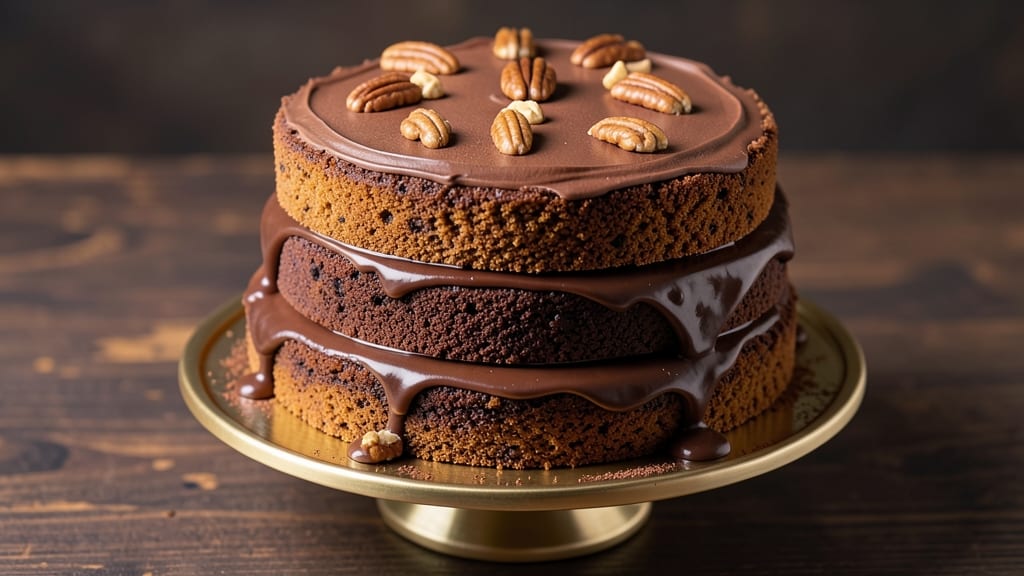
Alton Brown’s German chocolate cake delivers layers of rich, moist cake studded with candied pecans and crowned with his signature caramel frosting. This recipe combines classic German chocolate cake elements—like the pecan topping and chocolate glaze—with Alton’s precision baking techniques for foolproof results every time.
The secret lies in the cake’s tender crumb and the frosting’s perfect balance of sweetness and salt.
What sets this recipe apart is the two-stage baking process: the cake layers bake first, then the pecan topping gets toasted separately for maximum crunch. The frosting, made with brown sugar and butter, adds a caramel-like richness that ties everything together.
No special equipment is needed—just a few essential tools and careful attention to timing.
By the time you slice into this cake, you’ll taste layers of moist, buttery cake, crunchy pecans, and a velvety frosting that melts into every bite.
The aroma alone will have everyone gathering around the table, and the texture—tender yet sturdy—makes it perfect for celebrations or a special dessert night.
Whether you’re baking for a crowd or treating yourself, this recipe delivers restaurant-quality results with minimal fuss. The instructions are clear, the techniques are tested, and the outcome is worth every minute spent in the kitchen.
Ingredients for alton brown german chocolate cake
Twelve ingredients crafting layers of moist cake, crunchy pecans, and velvety caramel frosting.
| Ingredient | Amount | Notes |
|---|---|---|
| All-Purpose Flour 🌾 | 3 cups | Sifted for light texture |
| Granulated Sugar 🍚 | 2 cups | Superfine preferred for smoothness |
| Packed Brown Sugar 🍚 | 1 cup | Lightly packed for accuracy |
| Unsalted Butter 🧈 | 1 ½ cups | Cold, cubed for creaming |
| Large Eggs 🥚 | 4 whole | Room temperature for even baking |
| Pure Vanilla Extract 🌿 | 2 tsp | High-quality, pure vanilla |
| Baking Powder 🧂 | 2 tsp | Aluminum-free for stability |
| Salt 🧂 | ½ tsp | Diamond Crystal preferred |
| Whole Milk 🥛 | 1 cup | Room temperature for mixing |
| Pecans 🥜 | 2 cups | Chopped, toasted for flavor |
| Unsweetened Cocoa Powder 🍫 | ½ cup | Natural, Dutch-processed |
| Light Corn Syrup 🍯 | ½ cup | For pecan topping sweetness |
| Heavy Cream 🥛 | 1 ½ cups | Cold for frosting stability |
| Powdered Sugar 🍚 | 4 cups | Sifted for smooth frosting |
| Coarse Sea Salt 🧂 | 1 tsp | For frosting finishing |
The foundation starts with flour—sifted for that signature tender crumb Alton Brown perfected. King Arthur or Gold Medal brands deliver consistent results, but any high-protein all-purpose works. For the sugars, superfine white and light brown create the perfect balance—no graininess in the crumb. The butter must be cold when creamed; let it sit at room temperature for 30 minutes before measuring. Eggs should be room temperature too—cold yolks can cause uneven baking. The vanilla extract? McCormick or Nielsen-Massey brands offer the purest flavor without artificial additives. Measure the milk last—adding it too soon can make the batter too thin.
No superfine sugar? Pulse granulated sugar in a food processor for 30 seconds to refine it. Dutch-processed cocoa powder is essential for the pecan topping—it dissolves smoothly without bitterness. Bob’s Red Mill or Hershey’s Special Dark are reliable choices. For the toasted pecans, raw pecans from Whole Foods or Trader Joe’s yield the best flavor. If you prefer a smoother frosting, sift the powdered sugar twice through a fine-mesh sieve. The corn syrup in the pecan topping can be swapped for maple syrup (reduce by 1 tbsp), but it won’t caramelize as deeply. Salt matters here—Diamond Crystal dissolves completely, while table salt can leave grainy residues.
Store the dry cake layers in an airtight container with parchment between them for up to 4 days. The pecan topping keeps well in the fridge for 5 days, though it’s best used fresh. The frosting can be made 2 days ahead—it actually improves as it sits, developing deeper caramel notes. For serving, room-temperature cake slices beautifully. Freeze the assembled cake (unfrosted) for up to 3 months—thaw overnight in the fridge before frosting. The pecans lose crunch when refrigerated, so toast fresh portions if reheating the cake.
Why You'll Love This Recipe
- No Mixer Needed: I swear by this recipe when I’m too lazy to pull out the stand mixer—just cream the butter and sugars by hand (or use a hand mixer if you’re feeling fancy). The eggs and flour come together in minutes, and the cake layers up like magic without any fuss.
- Caramel-Pecan Magic: That perfect balance of rich brown sugar, melted butter, and toasted pecans? It’s what makes this cake dangerously good. The filling is thick, gooey, and just sweet enough to keep me reaching for seconds—no artificial flavors here, just real, bold taste.
- Birthday Party Ready: Honestly, this cake feels like a restaurant dessert but takes zero effort to impress. Serve it warm with vanilla ice cream, and suddenly you’re the hero of any gathering—whether it’s a birthday, holiday dinner, or just a lazy Sunday.
- Budget-Friendly Luxury: You’d never guess it by the taste, but this cake is shockingly affordable. A single batch uses basic pantry staples (flour, sugar, butter) and stretches to feed a crowd. Leftovers? They disappear faster than you can say “second slice.”
Step-by-step instructions for Alton brown's German chocolate cake
Master this classic with perfectly moist layers and rich caramel frosting—every step ensures restaurant-quality results.
Prepare the Cake Layers
Preheat your oven to 350°F and grease three 9-inch round cake pans with butter, then line the bottoms with parchment paper. In a stand mixer fitted with the paddle attachment, beat the 1.5 cups unsalted butter and 2 cups granulated sugar on medium speed for 3-4 minutes until light and fluffy. This creaming process incorporates air, which creates the cake's signature tender crumb.
Add the 4 whole large eggs one at a time, mixing well after each addition, followed by the 2 tsp pure vanilla extract. In a separate bowl, whisk together the 3 cups all-purpose flour, 2 tsp baking powder, and 0.5 tsp salt. With the mixer on low speed, gradually add the dry ingredients to the wet mixture, alternating with the 1 cup whole milk, beginning and ending with the flour. Mix just until combined—overmixing develops gluten and makes the cake dense.
Add Pecans and Bake the Layers
Fold in 1 cup of the 2 cups pecans (reserve the remaining for the topping) using a spatula. Divide the batter evenly among the prepared cake pans. Bake for 25-30 minutes or until a toothpick inserted into the center emerges clean. Rotate the pans halfway through baking for even browning. The cake should be golden on top but still slightly springy to the touch.
Let the cakes cool in the pans for 10 minutes, then transfer them to a wire rack to cool completely. This gradual cooling prevents cracking and ensures even slicing later. While the cakes cool, prepare the caramel topping and frosting—timing is key for assembly.
Make the Caramel Pecan Topping
In a saucepan, combine the 0.5 cup light corn syrup, 0.5 cup unsweetened cocoa powder, and 1 cup whole milk. Bring to a gentle boil over medium heat, stirring constantly until the mixture thickens to a glossy, syrupy consistency. Remove from heat and whisk in the remaining 1 cup pecans until evenly coated. Spread this mixture evenly over the cooled cake layers, allowing it to cool completely before frosting.
The topping should be thick enough to hold its shape when spread but still pourable. If it thickens too much while cooling, gently reheat it in the microwave for 10-15 seconds to restore its spreadability. This step adds the signature German chocolate flavor and texture contrast.
Prepare the Caramel Frosting
In a separate saucepan, combine the 1.5 cups heavy cream and 1 cup packed brown sugar. Bring to a boil over medium-high heat, then reduce the heat to low and simmer for 5-7 minutes until the mixture thickens slightly and coats the back of a spoon. Remove from heat and whisk in the 4 cups powdered sugar until smooth and glossy.
Let the frosting cool to room temperature before using—this prevents melting when applied to the cake. Once cooled, fold in the 1 tsp coarse sea salt for a subtle but essential flavor balance. The frosting should be thick enough to pipe but still spreadable; if too stiff, thin with a splash of milk.
Assemble and Frost the Cake
Place one cake layer on a serving plate, spread a thin layer of frosting on top, then add the caramel pecan topping. Repeat with the second layer, then top with the third layer. Frost the entire cake with the remaining frosting, creating smooth sides and a slightly peaked top. Chill the cake in the refrigerator for at least 2 hours before serving to allow the frosting to set and the flavors to meld.
Slice with a warm knife for clean cuts, and serve each piece with a dollop of extra frosting. The cake should be moist with a tender crumb, the pecans should be toasted and crunchy, and the frosting should be rich and slightly salty. This method delivers the perfect balance of textures and flavors Alton Brown is known for.
Pro Tips For Making Alton Brown German Chocolate Cake
- MEASURE BROW SUGAR CORRECTLY: I learned this the hard way—packed brown sugar isn’t the same as loose. Use a spoon to press it firmly into the measuring cup, then level it off. That extra moisture makes a difference in the cake’s texture, and skipping this step means your cake might turn out denser than it should.
- CREAM BUTTER AND SUGARS LOW: Don’t rush the butter-sugar mix. Let it cream on medium-low for at least 3-4 minutes until it’s light and fluffy—no streaks of butter left. I used to crank the speed too high, and the mixture would heat up instead of emulsify. Patience here guarantees a tender crumb.
- DON’T OVERMIX THE BATTER: Stop folding in the flour as soon as it’s just combined. Overmixing develops gluten, and this cake relies on a tender, moist texture. I’ve seen people beat this batter like they’re making pancakes—don’t be that person. Two quick swirls with a spatula is all it takes.
- USE ROOM-TEMP EGG WHITES: Cold egg whites can cause uneven baking or sinkholes in the cake. Let them sit out for 30 minutes before whipping, and make sure your bowl and beaters are dry. I skipped this once and ended up with a cake that looked like it had a few missing chunks—no one wants that.
Creative variations of these flavors
Gluten-Free Adaptation
Replace the 3 cups all-purpose flour with a 1:1 gluten-free baking flour blend like King Arthur Measure for Measure or Bob’s Red Mill 1-to-1. Add 1 tsp xanthan gum to mimic gluten’s structure—this prevents crumbling.
Use the same mixing method, but avoid overmixing to maintain moisture. The cake will be slightly denser but still tender. 🌾
Vegan Frosting Twist
Swap the heavy cream for full-fat coconut milk (canned, well-shaken) and use Earth Balance vegan butter instead of butter in the cake. For the frosting, blend 1 cup coconut cream with 4 cups powdered sugar and 1 tsp vanilla extract.
The frosting will have a lighter texture but still hold its shape when chilled. 🥥
Spiced Orange Glaze
After frosting, drizzle the cake with a glaze made from ½ cup powdered sugar, 2 tbsp orange juice, and ½ tsp cinnamon. Warm the glaze gently to dissolve the sugar, then strain for smoothness.
The citrus brightens the rich flavors, while cinnamon adds warmth. Use a piping bag for elegant swirls. 🍊
Boozy Pecan Topping
Infuse the pecan topping with 2 tbsp bourbon or rum while the syrup simmers. The alcohol burns off during cooking, leaving behind a deep, caramelized aroma. For extra decadence, add 1 oz dark chocolate chips to the topping before spreading. This variation feels like a grown-up dessert. 🥃
Mini Cake Version
Scale down the recipe to bake in 6 6-inch pans instead of 9-inch layers. Use ⅔ of the batter for each pan and reduce baking time to 20-25 minutes. Perfect for parties or individual servings! The mini cakes are ideal for gift boxes or cake pops. 🎂
Espresso-Enhanced Cake
Add 1 tbsp instant espresso powder to the dry ingredients for a subtle coffee note that pairs beautifully with the chocolate. This works especially well if you’re serving it with coffee or after dinner. The espresso deepens the chocolate flavor without overpowering it. ☕
Nutrition facts
Frequently asked questions
Why does Alton Brown's recipe use a two-stage baking process?
The two-stage process—baking the cake layers first, then toasting the pecan topping separately—ensures perfect texture. The cake layers cool completely before adding the topping, preventing sogginess. The separate toasting of pecans in the caramel mixture creates maximum crunch while developing deep, toasty flavor. This method guarantees each component maintains its ideal texture when assembled.
Can I make this cake without a stand mixer?
Use a hand mixer or even a sturdy whisk for the butter and sugar—just beat for 5-7 minutes until light and fluffy. For the dry ingredients, whisk them thoroughly in a bowl before folding into the wet mixture. The key is patience: cream the butter and sugar until it's pale and increased in volume by about 50%. This step is crucial for that signature tender crumb.
What's the secret to preventing dry cake layers?
Don't overmix the batter—mix just until combined—and use room-temperature ingredients. The milk should be at room temperature too. Also, check for doneness at 25 minutes (not 30) to prevent overbaking. Finally, store the cooled layers in an airtight container with parchment between them to maintain moisture. The frosting's richness helps keep everything tender too.
How do I fix cracked cake layers?
Cracks usually happen from overmixing or sudden temperature changes. If you notice cracks after baking, let the cakes cool completely in their pans, then carefully smooth them with a thin layer of frosting before adding the pecan topping. For assembly, use a thin layer of frosting as "glue" between layers—this creates a seamless finish. The final frosting will hide any minor imperfections.
Can I make this cake ahead of time?
Yes! Bake the cake layers 1 day ahead and store them in an airtight container with parchment between layers. The frosting can be made 2 days ahead—it actually improves as it sits. Assemble the cake 4 hours before serving to let the frosting set properly. For best texture, let it sit at room temperature for 30 minutes before slicing. The flavors develop even more overnight.