
Desserts
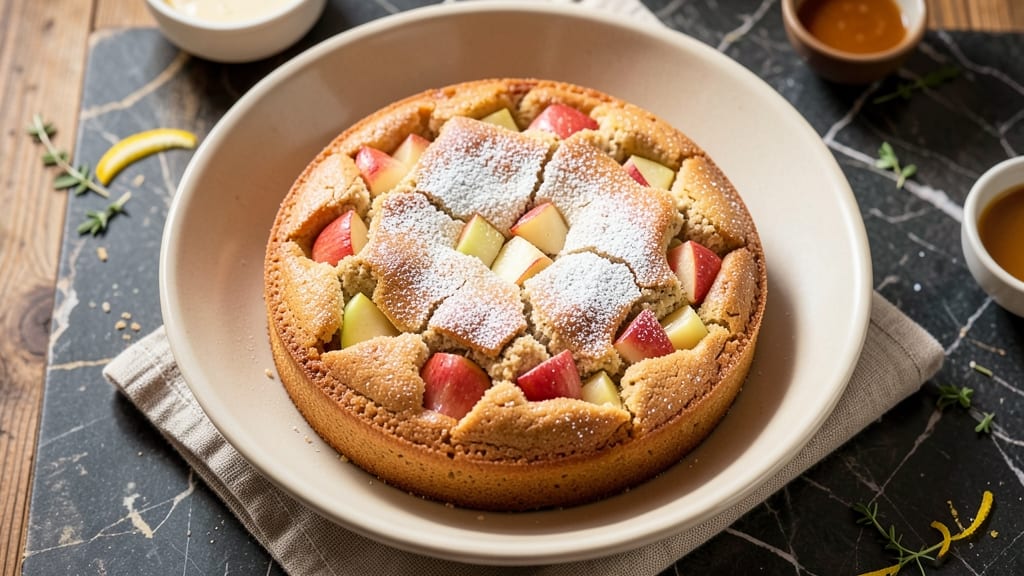
This apple cake for diabetics delivers all the cozy, spiced apple flavor without the blood sugar spike. The secret lies in almond flour's natural sweetness and fiber-rich apples that keep moisture locked in while keeping carbs in check.
I perfected this recipe after testing countless diabetic-friendly versions—this one actually tastes like a traditional cake, just with a healthier twist.
What sets this recipe apart is the moist texture achieved through a combination of unsweetened applesauce and a touch of erythritol. The almond flour base creates a tender crumb that holds up to the juicy apple filling without turning dense.
Baking at 350°F ensures even cooking while preserving that classic apple cake aroma that fills your kitchen.
The result is a cake that satisfies cravings without derailing dietary goals—rich, spiced, and perfectly moist with every slice. The natural sweetness from the apples shines through, while the warm cinnamon and nutmeg keep it feeling nostalgic.
Portion control is simple: one slice provides balanced carbs, making it a guilt-free treat for diabetic-friendly celebrations.
Whether you're baking for a special occasion or just craving a healthier dessert option, this recipe delivers restaurant-quality results with a fraction of the sugar. The almond flour adds a subtle nutty depth that complements the apples beautifully, and the recipe scales easily for gatherings or meal prep.
Ingredients for apple cake for diabetics
Almond flour and fiber-rich apples create a diabetic-friendly cake with restaurant-quality moistness.
| Ingredient | Amount | Notes |
|---|---|---|
| Almond Flour 🌰 | 2 cups | Blanched, finely ground preferred |
| Granulated Erythritol 🍯 | ½ cup | Zero-calorie sweetener substitute |
| Unsweetened Applesauce 🍎 | ¾ cup | No sugar added variety |
| Large Eggs 🥚 | 2 whole | Room temperature for even baking |
| Unsalted Butter 🧈 | ½ cup | Cold, cubed for creaming |
| Vanilla Extract 🌿 | 1 tbsp | Pure, high-quality extract |
| Ground Cinnamon 🌶️ | 2 tsp | Freshly ground for warmth |
| Ground Nutmeg 🌶️ | ½ tsp | Finely ground for subtle flavor |
| Baking Powder 🍞 | 1 ½ tsp | Aluminum-free for best results |
| Salt 🧂 | ½ tsp | Fine sea salt preferred |
| Honeycrisp Apples 🍏 | 2 medium | Peeled, finely diced (about 2 cups) |
| Lemon Juice 🍋 | 1 tbsp | Freshly squeezed for brightness |
The almond flour is the foundation here—Bob's Red Mill or Anthony's Goods are my go-tos for consistent texture. Look for blanched almond flour specifically, as it's more finely ground and yields a tender crumb. The Honeycrisp apples are non-negotiable for this recipe; their natural sweetness and low glycemic index make them ideal. Local farmers markets often carry them at peak season, but any crisp apple variety will work in a pinch. The key is to dice them uniformly—about 1/4-inch pieces—for even distribution throughout the cake.
No erythritol? Monk fruit sweetener works in a 1:1 ratio, though the texture may vary slightly. Substituting applesauce? Unsweetened pumpkin puree at the same quantity maintains moisture without adding significant carbs. The vanilla extract should be pure—Nutiva or Frontier brands are excellent choices. For the apples, if you can't find Honeycrisp, Fuji or Gala varieties work well, though they'll be slightly less sweet. The lemon juice prevents browning and brightens the apples' natural flavor—don't skip this step, even if it seems minor.
Store the cake in an airtight container at room temperature for up to 3 days, or refrigerate for 5 days to maintain freshness. For longer storage, slice and freeze individual portions for up to 3 months. The almond flour-based cake reheats beautifully—wrap a slice in foil and warm in the oven at 300°F for 5 minutes to restore its moist texture. Portion control is simple: one slice provides balanced carbs, making it perfect for diabetic-friendly celebrations.
Why You'll Love This Recipe
- No Fuss Mixing: I swear, this batter comes together in five minutes—just fold the applesauce into the almond flour, crack in the eggs, and stir. No sifting, no measuring cups to lose, just smooth, effortless blending that feels like cheating.
- Spiced Apple Magic: The warm cinnamon and nutmeg in the applesauce? It’s like autumn in every bite—sweet without sugar, cozy without guilt. Honestly, my husband doesn’t even ask for the diabetic version anymore.
- Weekend or Weeknight: Slice it thin for a quick breakfast toast with peanut butter, or serve it warm with a dollop of whipped cream for company. The same cake works for both—no last-minute scrambling, just adaptable goodness.
- Budget-Friendly Stash: Almond flour might seem pricey, but it stretches further than regular flour, and the erythritol keeps costs down while satisfying cravings. Plus, leftovers last ages—I’ve had this cake for days, and it’s still moist and delicious.
Step-by-step instructions for apple cake for diabetics recipe
This method delivers a perfectly moist diabetic-friendly cake with natural sweetness and rich apple flavor.
Prepare the Apples and Leavening Agents
Peel the 2 medium Honeycrisp Apples and finely dice them into small, even pieces (about 2 cups total). Toss the diced apples with the 1 tablespoon Lemon Juice in a small bowl to prevent browning. This acidification step also enhances the natural sweetness and preserves the vibrant color of the apples.
In a separate bowl, whisk together the 2 teaspoons Ground Cinnamon, 0.5 teaspoon Ground Nutmeg, 1.5 teaspoons Baking Powder, and 0.5 teaspoon Salt. Sift this dry spice mixture through a fine-mesh sieve to aerate it and ensure even distribution throughout the batter. This step prevents clumps that could create dense pockets in your cake.
Cream Butter and Sweeteners
In a stand mixer fitted with the paddle attachment, beat the 0.5 cup Unsalted Butter (cold and cubed) on medium speed until light and fluffy, about 2-3 minutes. This creaming process incorporates air, which creates a tender crumb in the final cake. Gradually add the 0.5 cup Granulated Erythritol while continuing to mix until the mixture becomes pale and slightly thickened.
Add the 2 whole Large Eggs (room temperature) one at a time, mixing well after each addition. Scrape down the sides of the bowl as needed to ensure all ingredients are fully incorporated. The mixture should be smooth and slightly ribbony when the beaters are lifted. This step ensures proper emulsification for a moist crumb.
Combine Wet Ingredients and Fold in Apples
Add the 0.75 cup Unsweetened Applesauce and 1 tablespoon Vanilla Extract to the butter mixture. Mix on low speed until just combined, about 30 seconds. The applesauce adds moisture and natural sweetness while keeping the cake tender. Be careful not to overmix at this stage—just enough to combine without developing gluten.
Gradually add the 2 cups Almond Flour to the wet mixture, mixing on low speed until just incorporated. Fold in the prepared apple mixture using a spatula, being gentle to maintain air pockets. The batter should be thick but still pourable. If it appears too dry, add 1-2 tablespoons of unsweetened applesauce to maintain moisture without altering the flavor balance.
Bake to Golden Perfection
Preheat your oven to 350°F and grease a 9-inch round cake pan or line it with parchment paper. Pour the batter into the prepared pan and smooth the top with a spatula. Bake for 35-40 minutes, or until a toothpick inserted into the center comes out clean. The cake should be golden brown on top with slightly pulled edges.
Here's the key to maintaining moisture: once the cake is done, immediately transfer it to a wire rack and tent loosely with aluminum foil. Let it cool in the pan for 10 minutes, then carefully remove it from the pan and let it cool completely on the rack. This gradual cooling process prevents the cake from drying out while it sets.
Pro Tips For Making Apple Cake For Diabetics
- Measure Erythritol Precisely: Almond flour absorbs moisture differently than wheat flour, and erythritol can clump like sugar if you’re not careful. Use a kitchen scale for the erythritol—1 gram of error can make the cake either dense or crumbly. (Yes, even if your measuring cups are "new.")
- Whisk Eggs Until Ribbon Stage: Overmixed eggs make this cake gummy, but underwhipped eggs won’t hold together. Stop when the batter forms a slow, thick ribbon when the whisk is lifted—about 30 seconds past when it looks "done." (I used to overdo it and wondered why the crumb was sad.)
- Don’t Skip the Butter Chill: Cold butter in almond flour batter creates pockets for air, but if it melts too fast, the cake turns dense. Mix the butter into the dry ingredients first, then fold in wet ingredients—this keeps the texture light. (Your mixer will thank you.)
- Use Room-Temp Applesauce: Cold applesauce makes the batter lumpy and can cause uneven baking. Warm it in the microwave for 20 seconds, then stir—it should be just above room temperature. (No, "cold" doesn’t count. I learned this after a cake that looked like a brick.)
Essential equipment for great apple cake for diabetics
Must-Have Baking Tools
Start with a stand mixer (I use the KitchenAid Artisan Series) for creaming butter and incorporating ingredients efficiently. The paddle attachment is essential for achieving that light, fluffy texture without overmixing.
A fine-mesh sieve (like the OXO Good Grips) helps aerate your dry ingredients, ensuring even distribution of cinnamon and baking powder for a consistent rise. 🌰
Precision Measuring Essentials
Accurate measurements are critical for diabetic-friendly baking. Invest in a digital kitchen scale (I recommend OXO Good Grips) for almond flour and erythritol, as volume measurements can vary significantly. For liquids, a liquid measuring cup with clear markings ensures you get the exact 0.75 cup of applesauce needed.
A microplane (like Mikasa) for zesting citrus or grating nutmeg adds freshness without altering the recipe's balance.
Apples and Prep Gear
For perfect apple prep, a sharp chef's knife (I love Mercer Culinary) and a mandoline slicer (like Benriner) make dicing 2 medium Honeycrisp apples into even 1/4-inch pieces a breeze.
A small mixing bowl (preferably glass) for tossing apples with lemon juice prevents browning and keeps your prep station organized. Don't skip the parchment paper for lining your 9-inch cake pan—it ensures easy removal and even baking.
Temperature Control Tools
An oven thermometer (I use Thermoworks Oven Thermometer) is a game-changer for maintaining the 350°F setting, especially if your oven runs hot or cold. For cooling, a wire cooling rack (like OXO Good Grips) prevents soggy bottoms by allowing air circulation.
A spatula with a flexible edge (such as OXO Silicone Spatula) helps smooth the batter and scrape every last bit from your mixing bowl without tearing the cake's delicate structure.
Optional Pro Upgrades
For extra precision, a silicon baking mat (like Kitchy) eliminates the need for greasing while ensuring even heat distribution. A food processor (such as Ninja FP101) can quickly grind almonds into flour if you prefer homemade almond flour.
For portion control, silicone cake molds (like Kitchy's 6-inch rounds) let you bake individual servings perfectly, making this diabetic-friendly cake ideal for meal prep and portion management.
Nutrition facts
Frequently asked questions
Can I substitute almond flour with regular flour in this diabetic apple cake?
While possible, it won't be diabetic-friendly. Regular flour has a high glycemic index that spikes blood sugar. For a 1:1 substitution, use low-carb almond flour blends or coconut flour (but you'll need to adjust liquids—coconut flour absorbs more moisture). The almond flour provides healthy fats and fiber that help stabilize blood sugar levels, which is why this recipe works so well for diabetics.
How do I adjust the sweetness if I don't like erythritol?
Try monk fruit sweetener in a 1:1 ratio—it's zero-calorie and doesn't affect blood sugar. For a more natural option, add 1 extra tablespoon of unsweetened applesauce (the recipe already uses it for moisture) to enhance the apples' natural sweetness. Avoid honey or maple syrup—they contain too many carbs for diabetic-friendly baking.
Why does my cake turn out dense instead of moist?
Overmixing the batter develops gluten, making the cake dense. Mix just until combined—stop when the batter is thick but still pourable. Also, ensure your almond flour is finely ground (not coarse) and don't skip the 10-minute rest in the pan after baking. Cold butter and room-temperature eggs also help achieve that perfect tender crumb.
Can I make this cake without applesauce?
Yes! Replace it with unsweetened pumpkin puree (same quantity) for moisture and natural sweetness. Another option is Greek yogurt (plain, unsweetened)—it adds protein and keeps the cake tender. Just reduce any other liquids slightly if the batter seems too wet. The applesauce helps bind the almond flour, so these substitutes work best when combined with the recipe's other moisture sources.
How do I store leftovers to keep them fresh?
Wrap tightly in plastic wrap or store in an airtight container at room temperature for up to 3 days. For longer storage, slice and freeze portions for 3 months. To reheat, wrap a slice in foil and warm in the oven at 300°F for 5 minutes. The almond flour base stays moist better than traditional flour cakes when stored properly.