
Desserts
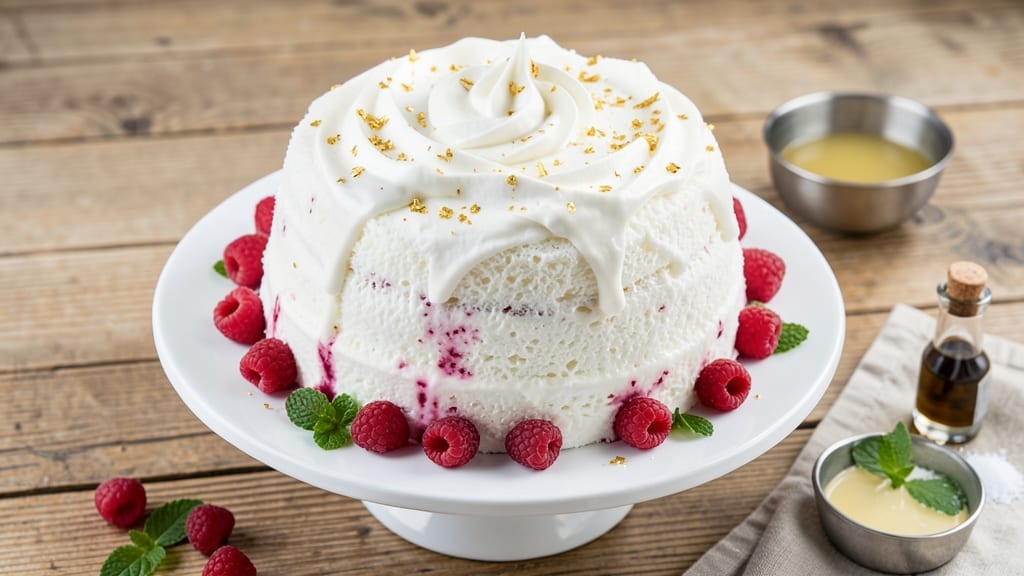
This angel food cake recipe without eggs delivers the same ethereal lightness and delicate crumb you’d expect from classic versions—but with a plant-based twist. 💛 The secret lies in aquafaba (chickpea brine), which mimics egg whites’ structure when whipped to stiff peaks, creating that signature airy texture without compromising flavor or moisture.
Traditional angel food cakes rely on whipped egg whites for their signature fluffiness, but this adaptation uses aquafaba—a simple yet brilliant substitution that yields the same tender, melt-in-your-mouth crumb. The key to success is precise folding and baking at the right temperature to maintain that signature height and delicate texture.
What you’ll end up with is a light-as-air cake that’s naturally sweet, lightly vanilla-infused, and perfect for special occasions or dietary restrictions. The texture remains true to the original—just without the eggs—making it a crowd-pleaser that even traditionalists will love.
This recipe is ideal for those avoiding eggs due to allergies, vegan diets, or simply a desire for a lighter dessert. Let’s get baking!
Ingredients for angel food cake recipe without eggs
Nine simple ingredients transform into an ethereal, egg-free angel food cake with perfect height.
| Ingredient | Amount | Notes |
|---|---|---|
| Aquafaba (chickpea brine) 🌱 | 1 ½ cups | Freshly strained from canned chickpeas |
| Granulated Sugar 🍚 | 2 cups | Superfine for best texture |
| Unbleached All-Purpose Flour 🌾 | 2 cups | Sifted for lightness |
| Pure Vanilla Extract 🌿 | 1 tbsp | High-quality, Madagascar bourbon |
| Cream of Tartar 🧂 | ½ tsp | Stabilizes whipped aquafaba |
| Salt 🧂 | ½ tsp | Fine sea salt preferred |
| Vegetable Oil Spray 🫒 | 1 tbsp | For greasing pan |
| Lemon Zest 🍋 | 1 tsp | Freshly grated |
| Powdered Sugar 🍚 | ½ cup | For dusting |
| Fresh Berries 🍓 | 2 cups | Optional for topping |
The aquafaba is the star—use freshly strained from a can of chickpeas (no salt added). Trader Joe's or Whole Foods carry high-quality chickpeas for this. For best results, strain through a fine-mesh sieve and whisk vigorously before whipping. If your aquafaba isn't foamy enough, add 1/4 tsp cream of tartar to stabilize. The superfine sugar makes all the difference here—Bob's Red Mill brand is my go-to, but any high-quality superfine will work. Sift both the flour and sugar together for that signature angel food cake texture.
No aquafaba? Silken tofu blended with 1 tsp vinegar works in a pinch (though texture differs slightly). For the vanilla, imitation extracts won't cut it—Madagascar bourbon or Tahitian pure vanilla extracts add depth. The lemon zest can be substituted with 1/2 tsp lemon extract if fresh isn't available, but the bright citrus note is worth the zesting. If you're baking in a humid climate, reduce aquafaba by 1 tbsp—it whips up differently in humidity. The powdered sugar topping? Confectioners' sugar from Domino works perfectly for dusting.
This cake keeps best in an airtight container at room temperature for 2 days, though it's best enjoyed fresh. For longer storage, wrap tightly in plastic and refrigerate for up to 5 days—bring to room temperature before serving. Freezing isn't recommended as it can alter the delicate crumb. Serve immediately after baking for that signature lightness. The berries? Strawberries or raspberries add a pop of color—toss them in 1 tsp powdered sugar before serving for extra sweetness.
Why You'll Love This Recipe
- No Eggs, No Stress: The aquafaba trick means no cracked shells or messy bowls—just whisk chickpea brine until fluffy. Honestly, it’s the kind of recipe where you’ll laugh at how simple it is after the first try.
- Vanilla Kiss Magic: That pure vanilla extract? It’s not just flavor—it’s the secret to a cake so light and fragrant, you’ll want to eat it straight from the bowl. (Yes, even before the frosting.)
- Budget-Friendly Luxury: A single can of chickpeas replaces a dozen eggs, and the rest of the ingredients? Pantry staples. Between us, this is the kind of cake that makes you feel fancy without breaking the bank.
- Leftovers with Purpose: Slice it, toast it, or layer it with fruit—this cake stays fresh for days. I’ll be real: my kids fight over the scraps, but I always save the last piece for my coffee.
Step-by-step instructions for angel food cake without eggs
Here's how to create a cloud-like cake using aquafaba—no eggs required!
🍳 Step 1: Whip the Aquafaba to Stiff Peaks
In a spotlessly clean mixing bowl, combine the 1.5 cups aquafaba (chickpea brine) with the 0.5 tsp cream of tartar and 0.5 tsp salt. I like to use a stand mixer with the whisk attachment for this step—it's the secret to achieving those signature angel food cake peaks. Start on low speed and gradually increase to high over 3-5 minutes until the mixture forms stiff peaks that hold their shape when the whisk is lifted.
Here's the thing—you want to see the whisk leave a trail for a moment before the mixture falls back. This indicates proper aeration, which is crucial for that light-as-air texture. If it's not quite there after 5 minutes, keep whipping for another minute or two. The mixture should be thick, glossy, and hold its shape like meringue would. Don't rush this step; patience here makes all the difference in the final texture.
👨🍳 Step 2: Gradually Add Sugar and Flour
With the mixer still running on low speed, gradually add the 2 cups granulated sugar in 3 additions, mixing just until each addition is incorporated. This gradual approach prevents deflating the whipped aquafaba. After the sugar is fully incorporated, add the 2 cups unbleached all-purpose flour and the 1 tbsp pure vanilla extract in two additions, mixing just until combined.
I've found that overmixing at this stage can deflate the batter, so be gentle. You're looking for a smooth, thick batter that holds its shape when you lift the whisk. The batter should be like a thick, glossy cake batter—it should hold its shape when you lift the whisk out of the bowl. If it's too thin, you can whip it for another minute to rebuild some volume before proceeding.
🔪 Step 3: Fold in Lemon Zest and Prepare the Pan
Remove the bowl from the mixer and gently fold in the 1 tsp lemon zest using a silicone spatula. This step is delicate—you want to maintain as much air as possible in the batter. The lemon zest adds a bright, citrusy note that pairs beautifully with the vanilla. Once incorporated, transfer the batter to a piping bag fitted with a large round tip or a zip-top bag with a corner snipped off.
While you're preparing the batter, preheat your oven to 350°F. Lightly grease a 10-inch tube pan with the 1 tbsp vegetable oil spray, making sure to get into all the nooks and crannies. The pan should be completely dry before you add the batter—any moisture can cause the cake to sink. I like to use a clean paper towel to wipe out any excess oil after spraying to ensure a clean surface.
🥘 Step 4: Pipe and Bake the Cake
Pipe the batter into the prepared tube pan, filling it about 2/3 full. Tap the pan gently on the counter a few times to release any air bubbles that may have formed. Place the pan in the preheated oven and bake for 35-40 minutes, or until the top is golden brown and the cake springs back when gently pressed in the center.
Here's where it gets tricky—don't open the oven door during baking. The sudden temperature change can cause the cake to sink. Instead, rely on the visual cues: the top should be golden brown, and a toothpick inserted into the center should come out clean. If you're unsure, bake for another 5 minutes. The cake will continue to rise slightly as it cools, so it's better to err on the side of slightly underbaked than overdone.
⏰ Step 5: Cool and Serve with Fresh Berries
Remove the cake from the oven and let it cool in the pan for 5 minutes. Then carefully invert the cake onto a wire rack and let it cool completely. This cooling process is crucial—it allows the cake to set properly and prevents it from becoming gummy. While the cake cools, you can prepare your optional 2 cups fresh berries for topping or serving on the side.
Once completely cooled, dust the cake with the 0.5 cup powdered sugar using a fine-mesh sieve for that classic angel food cake finish. Serve slices with fresh berries on top or alongside for a beautiful presentation. This cake is best enjoyed the day it's made, as it holds its light, airy texture beautifully when fresh. Store any leftovers in an airtight container at room temperature for up to 2 days.
Pro Tips For Making Angel Food Cake Recipe Without Eggs
- WHISK AQUAFABA TO STIFF PEAKS: I learned this the hard way—skipping the extra minute or two to whip the aquafaba until it holds stiff peaks makes the cake dense and gummy. Use a stand mixer with the whisk attachment and keep going until you can flip the bowl upside down without anything sliding out. (Yes, it’ll take longer than you think.)
- SIFT FLOUR WITH CREAM OF TARTAR: Don’t just dump the flour in—sift it with the cream of tartar first. This keeps the batter light and prevents lumps that turn into tough pockets in the cake. I used to ignore this, and the texture always suffered. A fine-mesh sieve and a quick shake do the trick.
- STOP WHEN THE CENTER SPRINGS BACK: Angel food cake is done when the top springs back when pressed gently, not when it’s golden brown. Oven temperatures vary, so resist the urge to overbake—it’ll dry out and turn rubbery. A toothpick test works, but the spring-back method is more reliable.
- CHILL THE BATTER FOR 10 MINUTES: I was skeptical until I tried it—letting the batter rest before baking helps the sugar dissolve evenly and prevents a sunken center. Just pop it in the fridge while you preheat the oven. (Your future self will thank you.)
Essential equipment for this recipe
Tube Pan Essentials
A 10-inch tube pan is non-negotiable for this recipe—it creates that iconic tall, fluted shape. I recommend Wilton's non-stick tube pan for easy release, but any high-quality aluminum or anodized aluminum pan works.
Avoid dark-colored pans as they can cause uneven baking. The pan should be completely dry before adding batter—any moisture will cause sinking. 🌡️
Stand Mixer Must-Have
Your mixer needs to handle 5 minutes of high-speed whipping to achieve stiff peaks. I use a KitchenAid Artisan Series with the whisk attachment—it’s powerful enough to handle aquafaba’s density.
If you’re using a hand mixer, be prepared for 10+ minutes of arm work. The bowl must be spotlessly clean—even traces of grease will prevent proper aeration.
Piping Bag Trick
A piping bag with a large round tip (or a zip-top bag with a corner snipped off) is your secret weapon for even distribution. I like Ateco 805 tips—they’re sturdy and create smooth, consistent swirls.
Fill the bag 2/3 full to prevent spills, and tap the pan after piping to release air bubbles. This step ensures a uniform rise and prevents dense spots in your cake. ✨
Fine-Mesh Sieve
For dusting powdered sugar, a fine-mesh sieve (like OXO Good Grips) is essential—it prevents clumping and creates that snow-like finish. The same sieve works for sifting flour and sugar before mixing.
I also use it to strain aquafaba if it’s particularly thick. A good sieve makes all the difference in texture and presentation.
Oven Thermometer
Ovens run hot or cold—always use an oven thermometer (I swear by Thermoworks Oven Thermometer) to confirm your oven hits 350°F. Angel food cake is delicate; even a 25°F variation can affect rise and texture.
Place the thermometer near your tube pan while preheating for accuracy. This small tool prevents soggy or dense cake disasters. 🔥
Wire Rack & Inversion Tool
Cool the cake upside down on a wire rack to maintain height. A cake turner (like Wilton’s silicone one) makes inversion foolproof—no more cracked cakes! Let the pan cool 5 minutes in the oven first to set the structure.
If you don’t have a turner, wrap the pan in a clean kitchen towel before inverting for extra support. Patience here = perfect texture. 💪
Nutrition facts
Frequently asked questions
Can I substitute aquafaba with another egg replacement?
While aquafaba is the best option for mimicking egg whites, you can try silken tofu blended with 1 tsp vinegar as a backup. For a flax egg approach, mix 1 tbsp ground flaxseed + 3 tbsp water, but this won't provide the same airy texture—it's better for dense cakes. The aquafaba's protein structure is what creates those signature stiff peaks.
Why does my egg-free angel food cake sink?
Sinking usually happens from overmixing, opening the oven door early, or moisture in the pan. Make sure your tube pan is completely dry and greased with oil spray (not butter). Also, avoid opening the oven during the first 30 minutes of baking. The cake will rise as it cools, so slightly underbaking is better than overbaking.
How do I make this cake extra moist?
For a moister cake, try adding 2 tbsp lemon juice to the batter (along with the zest) or replacing 1 tbsp aquafaba with 1 tbsp unsweetened applesauce. The key is balancing moisture without compromising the airy texture. Also, brushing the cake with simple syrup (equal parts sugar + water) while still warm adds extra tenderness.
Can I bake this in a bundt pan instead?
Yes! A 10-12 cup bundt pan works well, but reduce baking time to 25-30 minutes since bundt pans bake faster. Grease it thoroughly with oil spray and dust with powdered sugar for easy release. The texture will be slightly denser than in a tube pan, but still light and delicious. The shape makes beautiful presentation for special occasions!
What's the best way to store leftovers?
Store in an airtight container at room temperature for up to 2 days. For longer storage, refrigerate for 5 days (bring to room temp before serving). Avoid freezing as it can make the cake gummy. To refresh, brush slices with warm simple syrup before serving. The cake's texture is best enjoyed fresh!