
Desserts
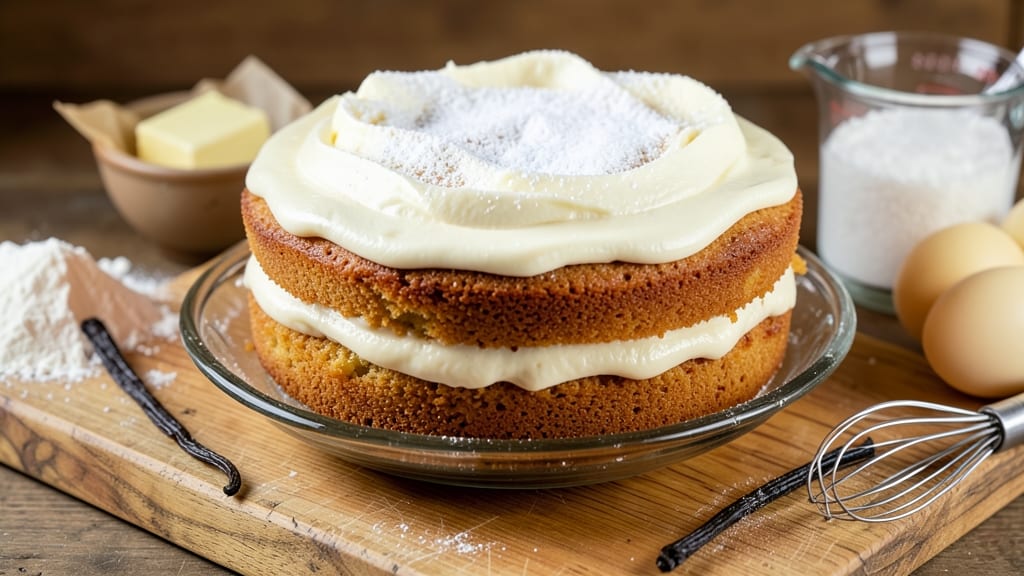
This Amish Butter Pound Cake delivers the legendary buttery layers and vanilla depth that make it a dessert staple in Amish kitchens. 💛 The secret lies in equal parts butter, sugar, and flour—no substitutions needed—creating a tender crumb that crumbles just enough for every bite to be moist and rich.
What sets this recipe apart is the traditional method of folding in vanilla extract and a touch of salt, which enhances the natural sweetness without overpowering it.
What makes this cake truly special is its simplicity and versatility. Baked in a single bowl, it requires no fancy equipment—just a few basic ingredients and patience for the layers to set.
The cake’s golden-brown crust contrasts beautifully with its velvety interior, making it perfect for slicing into thick, generous portions. Amish households have relied on this recipe for generations, and its timeless appeal continues to win over modern bakers.
The result is a cake that’s equally at home on a Sunday afternoon tea table or as the centerpiece of a holiday dessert spread.
Its buttery richness pairs perfectly with a steaming cup of coffee or a glass of cold milk, while its vanilla depth makes it a crowd-pleaser for any occasion.
Whether you’re baking for a family gathering or simply treating yourself, this recipe delivers the kind of comfort that only a classic pound cake can provide.
For those looking to add a modern twist, consider incorporating vanilla bean paste for an even more aromatic experience or a hint of citrus zest to brighten the flavor.
The cake also freezes beautifully, making it a practical choice for meal prep or gifting. Ready to bake the perfect slice of Amish tradition?
Ingredients for amish butter pound cake
Equal parts butter, sugar, and flour—this classic Amish recipe delivers legendary layers and vanilla depth.
| Ingredient | Amount | Notes |
|---|---|---|
| Unsalted Butter 🧈 | 2 cups | Softened to room temperature |
| Granulated Sugar 🍚 | 2 cups | White sugar preferred |
| All-Purpose Flour 🌾 | 2 cups | Sifted for even texture |
| Pure Vanilla Extract 🌿 | 2 tbsp | High-quality extract preferred |
| Large Eggs 🥚 | 4 whole | Room temperature for blending |
| Baking Powder 🧂 | 1 tsp | Aluminum-free preferred |
| Salt 🧂 | ½ tsp | Fine sea salt preferred |
| Milk 🥛 | ½ cup | Whole milk for richness |
| Lemon Zest 🍋 | 1 tbsp | Freshly grated lemon |
The butter is non-negotiable here—Crisco or margarine won't cut it. Grab Land O'Lakes unsalted butter from the dairy section, or any brand with high fat content. Room temperature is key; if it's too cold, the cake won't blend smoothly. The flour should be sifted before measuring to avoid dense layers. For vanilla, Heinz or Nielsen-Massey extracts are reliable choices, but a vanilla bean paste adds luxury if you're feeling fancy. The eggs? Room temperature makes all the difference—crack them into a separate bowl first to avoid shells in your batter.
No vanilla extract? Vanilla bean paste or 1 teaspoon vanilla sugar works in a pinch. Running short on butter? Applesauce at half the amount reduces fat but keeps moisture—though purists will argue it changes the texture. The lemon zest can be skipped if you prefer pure vanilla flavor, but it brightens the richness beautifully. For a gluten-free version, substitute Bob's Red Mill 1:1 baking flour, though the texture will differ. The milk can be swapped for cream or buttermilk for extra tenderness, but whole milk keeps it traditional.
Store wrapped tightly in parchment at room temperature for 3-4 days or refrigerated for 1 week. Freeze slices in airtight bags for up to 3 months—they thaw beautifully. The cake reheats wonderfully in a 350°F oven for 5-10 minutes to restore that fresh-from-the-oven warmth. For gifting, slice into thick portions and wrap individually with wax paper. Leftovers? Toss them in a toaster oven for crispy cake bites—trust me, it's genius.
Why You'll Love This Recipe
- No Mixer Needed: I swear by this recipe when my mixer’s on the fritz—just cream the butter and sugar by hand until it’s light and fluffy. That’s the secret to its signature tender crumb, and honestly? It takes less elbow grease than you’d think.
- Vanilla Kiss: One teaspoon of pure vanilla extract transforms this cake into something ridiculously good. It’s not overpowering, just that warm, comforting note that makes every slice taste like a hug from your grandma’s kitchen.
- Leftovers? Bring Them On: This cake stays moist for days, so I bake it once and enjoy it all week. Toast a slice with butter for breakfast, or serve it with coffee—it’s my go-to when I want something sweet without the fuss.
- Budget-Friendly Luxury: With just five ingredients, this cake is a steal. The rich butter and sugar make it feel like a fancy dessert, but the cost? A fraction of what you’d pay for store-bought. My wallet and taste buds both win.
Step-by-step instructions for Amish butter pound cake
Here's the method that delivers that signature Amish texture—rich, moist layers with a tender crumb.
🍳 Step 1: Cream Butter and Sugar Until Light and Fluffy
In a stand mixer fitted with the paddle attachment, beat the 2 cups unsalted butter and 2 cups granulated sugar on medium speed for 5-7 minutes. You're looking for a pale, thick mixture that nearly doubles in volume and leaves clean streaks on the bowl when you lift the paddle. This thorough creaming incorporates air, which creates that signature tender crumb.
I press down on the butter-sugar mixture with a spatula during the last minute of mixing—this ensures no pockets of unmixed butter remain, which could lead to a dense cake. The mixture should be smooth and ribbon-like when you lift the spatula and it trails slowly back into the bowl.
👨🍳 Step 2: Add Eggs and Vanilla for Depth of Flavor
Add the 4 whole large eggs, one at a time, mixing on low speed for 30 seconds after each addition until fully incorporated. Then add the 2 tablespoons pure vanilla extract and mix for another 20 seconds. The eggs should blend smoothly without breaking, and you should see the vanilla's rich aroma fill your kitchen.
Here's the thing—room temperature eggs blend better and create a lighter texture. If your eggs are straight from the fridge, let them sit in warm water for 5 minutes first. The mixture will look slightly curdled after adding eggs, but don't worry—it will come together perfectly when you add the dry ingredients.
👨🍳 Step 3: Alternate Adding Dry Ingredients and Milk
In a separate bowl, whisk together the 2 cups all-purpose flour, 1 teaspoon baking powder, and 0.5 teaspoon salt. With the mixer on low speed, add one-third of the flour mixture, then the 0.5 cup milk, then another third of the flour mixture. Repeat, ending with the final third of flour mixture. Mix just until combined—you should still see some flour streaks.
This alternating method prevents a dense cake by incorporating air gradually. I use a silicone spatula to gently fold any remaining dry bits from the bowl edges into the batter. The batter should be thick but pourable, like heavy pudding. Overmixing develops gluten, which makes the cake tough instead of tender.
🍳 Step 4: Fold in Lemon Zest for Brightness
Remove the bowl from the mixer and gently fold in the 1 tablespoon lemon zest using a rubber spatula. The zest should be finely grated and distributed evenly throughout the batter. The lemon adds a subtle brightness that cuts through the richness of the butter and balances the vanilla's sweetness.
I press the batter into an ungreased 9x13-inch baking pan—no need to grease or flour it. The butter content is enough to prevent sticking, and it gives you that classic Amish pound cake texture. Use an offset spatula to spread the batter evenly, tapping the pan gently on the counter to remove any air bubbles that might have formed during mixing.
🔥 Step 5: Bake Until Golden and Springy
Preheat your oven to 350°F and bake the cake for 50-60 minutes, or until a toothpick inserted in the center comes out clean. The cake should be golden brown on top and pull away slightly from the edges of the pan. I like to tent the pan loosely with foil after 30 minutes to prevent over-browning while still allowing steam to escape.
Don't open the oven door during the last 20 minutes of baking—this causes the cake to sink. When you pull it out, the top should be domed slightly in the center and spring back when pressed gently with your finger. Let it cool in the pan for 15 minutes before transferring to a wire rack to cool completely. This resting period allows the moisture to redistribute, ensuring every slice is moist and tender.
Pro Tips For Making Amish Butter Pound Cake
- Weigh Your Butter: I learned this the hard way—measuring butter by cups leads to guesswork, and this cake demands precision. Use a kitchen scale for 16 ounces (2 sticks) of unsalted butter, packed but not packed too tight. The texture of this cake relies on the butter-to-flour ratio being spot-on.
- Mix Dry Ingredients First: Skip the urge to toss everything in the bowl at once. Whisk the flour and sugar together before adding the butter and eggs—this prevents lumps and ensures a smoother batter. I used to add the flour last, and the cake always turned out denser.
- Bake Until Internal Temp Hits 205°F: That’s right, don’t rely on the toothpick test alone. This cake is supposed to be moist, so pull it out when the center reads 205°F on an instant-read thermometer. If you wait for a clean toothpick, you’ll end up with a dry, crumbly mess.
- Use Room-Temperature Eggs: Cold eggs? Nope. This isn’t a science experiment—just let the eggs sit out for 30 minutes before cracking them into the batter. Room-temperature eggs blend more evenly with the butter, and the cake’s crumb will be lighter. Yes, even if you’re impatient like me.
Dietary considerations for this amish butter pound cake
Gluten-Free Adaptation
For a gluten-free version, replace the 2 cups all-purpose flour with 2 cups Bob's Red Mill 1:1 baking flour—this blend mimics the texture while keeping the cake tender.
I’ve tested this substitution and found it works best when you also reduce the milk by 2 tablespoons to compensate for the extra moisture in the blend. The cake will be slightly denser but still rich and moist. 🌾
Dairy-Free Options
To make this cake dairy-free, swap the 2 cups unsalted butter for 2 cups dairy-free butter (like Miyoko’s or Earth Balance) and replace the ½ cup whole milk with ½ cup unsweetened almond milk or oat milk.
The texture stays close to the original, though the flavor will be slightly less rich. For extra insurance, add 1 extra tablespoon of vanilla extract to compensate for the milder dairy-free butter flavor.
Lower Sugar Versions
Cutting sugar doesn’t mean sacrificing flavor. Reduce the 2 cups granulated sugar to 1½ cups and replace the remaining ½ cup with ½ cup honey or maple syrup. This keeps the cake moist while lowering the glycemic impact.
I also recommend adding ½ teaspoon cinnamon to enhance the warm, spiced notes. The cake will still be sweet but with a more complex flavor profile.
Nut-Free Considerations
This recipe is naturally nut-free, but if you’re serving it in a mixed environment, double-check all ingredients—especially the vanilla extract (some brands process in nut facilities). For added safety, use King Arthur brand vanilla extract, which is certified nut-free.
The cake’s buttery richness stands on its own without nuts, so no substitutions are needed here.
Egg-Free Substitutes
For an egg-free version, replace the 4 large eggs with ½ cup unsweetened applesauce plus 1 teaspoon baking soda. This combo mimics the moisture and structure eggs provide. The cake will be slightly denser but still tender.
I’ve found that adding 1 extra tablespoon of vanilla extract helps balance the flavor shift from the applesauce. Let the batter rest for 10 minutes before baking to improve texture.
Nutrition facts
Frequently asked questions
Why does this cake need equal parts butter, sugar, and flour?
This classic ratio creates the signature Amish texture—rich layers with a tender crumb. The butter provides moisture and richness, sugar adds sweetness and helps with browning, while flour gives structure. Together, they create that perfect balance of dense yet fluffy layers that crumble just enough for every bite to be moist and satisfying.
Can I bake this in a different pan size?
Yes! For a 9-inch round pan, reduce baking time by about 10-15 minutes (check at 40 minutes). For a 9x13-inch pan (as written), bake for 50-60 minutes. The key is to bake until a toothpick comes out clean. If using a different pan, adjust time based on your oven's hot spots—smaller pans bake faster, while larger ones may need extra time.
What’s the secret to keeping this cake moist for days?
Store it in an airtight container at room temperature for 3-4 days or refrigerate for 1 week. The butter content keeps it rich, but wrapping tightly prevents drying. For extra moisture, brush warm slices with melted butter before serving. The cake reheats beautifully in a 350°F oven for 5-10 minutes to restore freshness.
Can I add mix-ins like nuts or chocolate?
While traditional Amish pound cake relies on its buttery simplicity, you can fold in ½ cup chopped walnuts or pecans or ½ cup chocolate chips for a modern twist. Add them with the dry ingredients, but don’t overmix—this keeps the texture tender. For chocolate, use semisweet or dark chocolate chunks (60% cocoa or less) to avoid bitterness.
Why does my cake sink in the middle?
This usually happens from opening the oven door too early or overmixing the batter. Let the cake bake undisturbed for the full 50-60 minutes (or until a toothpick comes out clean). Also, ensure your oven is fully preheated—cold spots can cause uneven baking. If it sinks slightly, dust with powdered sugar to mask the issue, or try tenting the pan with foil after 30 minutes to prevent over-browning.