Desserts
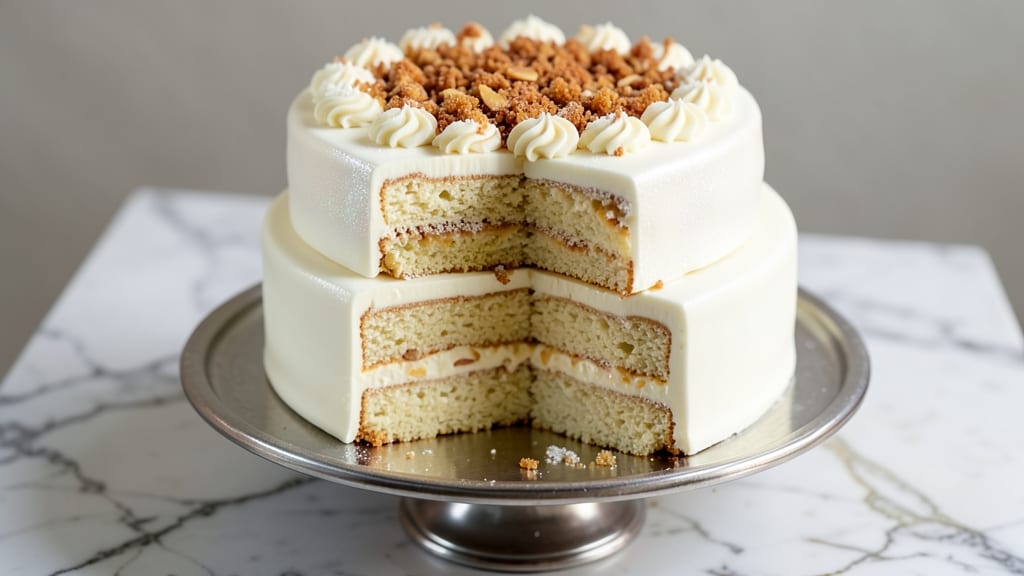
This amazing white cake recipe delivers the perfect balance of ultra-moist vanilla layers and a buttery crust that’ll make your taste buds dance. 💛 The secret lies in creaming butter and sugar properly—this isn’t just cake, it’s a cloud of happiness with every bite.
I’ve baked this for weddings, birthdays, and random Sunday treats, and it never fails to impress. What sets this apart is the foolproof technique for a tender crumb and that golden, buttery crust.
No fancy equipment needed—just a few simple ingredients and patience (the cake rises beautifully when baked at the right temperature). The vanilla extract and a pinch of salt elevate the flavor, making it taste like a bakery masterpiece without the fuss.
By the time you pull it from the oven, you’ll have layers that are light as air yet rich enough to satisfy any craving. The butter crust adds a crispy contrast that keeps everyone coming back for seconds.
Serve it plain, with fresh berries, or smothered in your favorite frosting—it’s that versatile. This recipe is perfect for beginners and pros alike. Let’s get baking—your next celebration (or just your next craving) is about to get a whole lot sweeter.
Ingredients for amazing white cake
Here's what transforms ordinary flour and sugar into a cloud of vanilla happiness.
| Ingredient | Amount | Notes |
|---|---|---|
| Unsalted Butter 🧈 | 1 cup | Room temperature, full-fat preferred |
| Granulated Sugar 🍚 | 2 cups | White cane sugar for best texture |
| Pure Vanilla Extract 🌿 | 2 tsp | High-quality Madagascar bourbon |
| Large Eggs 🥚 | 4 whole | Room temperature, separated |
| All-Purpose Flour 🌾 | 2 ½ cups | Sifted, spooned lightly |
| Baking Powder 🍞 | 2 tsp | Aluminum-free for tender crumb |
| Salt 🧂 | ½ tsp | Fine sea salt preferred |
| Whole Milk 🥛 | 1 cup | Room temperature, full-fat |
| All-Purpose Flour 🌾 | ½ cup | For butter crust |
| Powdered Sugar 🍚 | ¼ cup | For butter crust |
| Vanilla Extract 🌿 | 1 tsp | For butter crust |
| Cold Butter Cubes 🧈 | ½ cup | Cut into small pieces |
The butter is your golden ticket—use European-style or high-fat American butter (like Land O'Lakes or Plugrá) for that ultra-rich flavor. Room temperature is key—press a cube into a bowl, if it doesn't spring back, let it sit longer. I always grab mine from Whole Foods or the bakery section at Kroger—they keep it properly chilled. The vanilla extract? Bourbon or Madagascar varieties add depth that imitation can't match. For the eggs, separate them the night before and let them sit out—room temp eggs incorporate better into the batter.
No vanilla extract? Vanilla bean paste works perfectly—just use the same amount. Running short on powdered sugar for the crust? Blend regular sugar in a food processor until fine. The milk can be swapped for heavy cream or buttermilk (reduce baking powder by 0.5 tsp if using buttermilk). For a gluten-free version, replace the flour with a 1:1 GF blend—just know the texture will be slightly denser. The butter cubes for the crust must stay cold—freeze them for 15 minutes if your kitchen is warm. And if you're feeling fancy, add a pinch of citric acid to the crust for extra zing.
Store the cake layers wrapped tightly in plastic wrap at room temp for 2 days—it actually tastes better the next day. For longer storage, freeze the layers for up to 3 months (thaw overnight in the fridge). The butter crust keeps well for 5 days if stored in an airtight container. Pro tip: Brush the cake layers with simple syrup (equal parts sugar and water, heated) before assembling—this keeps them moist for days. And if you're making ahead, bake the crust separately and assemble when ready to serve.
Why You'll Love This Recipe
- No Mixer Needed: I swear by this recipe when I’m too tired to pull out the stand mixer. Creaming butter and sugar by hand gives those fluffy peaks, and the eggs blend right in with just a whisk—no fuss, no stress.
- Vanilla Kisses: That pure vanilla extract? It’s not just flavor—it’s the secret to a cake that tastes like a bakery’s. The butter and sugar combo makes it rich but light, and the vanilla ties it all together in one perfect bite.
- Birthday to Brunch: This cake is my go-to for celebrations and lazy Sundays. Frost it with cream cheese for a party, or serve it plain with coffee—no one judges, and neither do I.
- Budget Baking: Five ingredients, minimal waste. The butter and sugar stretch far, and the flour is basic but reliable. I’ve made this for 12 people and still had leftovers—no guilt, just cake.
Step-by-step instructions for ultra-moist vanilla cloud cake
Here's how to bake a showstopping white cake with a tender crumb and buttery crust—every layer perfect.
👨🍳 Step 1: Cream Butter and Sugar for Lightness
In a stand mixer fitted with the paddle attachment, beat the 1 cup unsalted butter and 2 cups granulated sugar on medium speed for 5-7 minutes until light and fluffy. You'll see the mixture nearly double in volume and turn pale—this incorporates air that keeps the cake tender. Scrape down the sides of the bowl every minute to ensure even mixing.
Here's the thing—don't rush this step. The butter should be completely smooth with no grainy texture. If you're using room-temperature butter (it should leave a slight indentation when pressed), you'll get the best results. If it looks too soft or melts, chill the bowl for 10 minutes before continuing.
👨🍳 Step 2: Add Eggs and Vanilla for Rich Flavor
Add the 4 whole large eggs, one at a time, mixing on low speed after each addition until fully incorporated. Then stir in the 2 teaspoons pure vanilla extract. The mixture should be thick and ribbon-like—if it's too thin, your cake will be dense. I like to add the eggs one by one to prevent curdling, especially when using cold eggs.
This is where the magic happens: the eggs add structure and moisture, while the vanilla infuses deep flavor. If your eggs are cold, let them sit at room temperature for 30 minutes first—they'll blend more smoothly. Real talk: if you accidentally add a hot egg, don't panic. Just whisk vigorously to prevent scrambling.
👨🍳 Step 3: Combine Dry Ingredients for Tender Crumb
In a separate bowl, whisk together the 2.5 cups all-purpose flour, 2 teaspoons baking powder, and 0.5 teaspoon salt. Sift the flour lightly into the bowl to avoid clumps—this ensures a tender crumb. Gradually add the dry mixture to the wet ingredients on low speed, mixing just until combined. You should still see small flour streaks—overmixing develops gluten and makes the cake tough.
Here's a pro tip: I like to use a rubber spatula to gently fold in the dry ingredients by hand after the initial mixer step. This gives me better control and prevents overmixing. The batter should be smooth but slightly thick—like pudding. If it's too thick, add 1 tablespoon of whole milk to loosen it.
🥘 Step 4: Prepare the Buttery Crust Layer
While the main batter rests, make the crust by combining the 0.5 cup cold butter cubes, 0.5 cup all-purpose flour, and 0.25 cup powdered sugar in a food processor. Pulse until the mixture resembles coarse crumbs with pea-sized butter pieces. Press this mixture evenly into the bottom of two 8-inch round cake pans—this creates that perfect buttery crust you crave.
Don't skip this step—it's what makes this cake truly amazing. The crust adds a rich, buttery flavor and prevents the cake from sticking to the pan. If you don't have a food processor, use your fingers to rub the butter into the flour until it resembles wet sand. Press it firmly into the pans to create an even layer.
🔥 Step 5: Bake to Golden Perfection
Preheat your oven to 350°F and divide the batter evenly between the prepared pans. Bake for 25-30 minutes, or until a toothpick inserted in the center comes out clean. The cakes should be golden on top but still slightly springy to the touch. I know it's tempting to open the oven early, but resist—this ensures even baking.
Here's the crucial part: once the cakes are done, let them cool in the pans for 10 minutes before transferring to a wire rack. This prevents them from cracking as they cool. For extra moisture, I like to tent the pans with foil while they cool. The cakes will be warm but not hot to the touch when ready to frost—this is ideal for layering.
⏰ Step 6: Layer and Frost for Showstopping Results
Once completely cooled, level the tops of the cakes if needed. Place the first layer on a cake stand or plate, then spread 1 cup of vanilla buttercream (made separately) evenly over the top. Dust the layer with a thin layer of powdered sugar to prevent crumbs, then place the second layer on top. Frost the entire cake with the remaining buttercream, creating smooth sides and swirls on top for that bakery-style finish.
This is where your cake becomes truly amazing. The buttery crust and ultra-moist layers work together perfectly with the rich vanilla frosting. Chill the cake in the refrigerator for 30 minutes before slicing—this helps the frosting set and makes clean cuts. Serve with fresh berries or a dusting of powdered sugar for a showstopping dessert.
Pro Tips For Making Amazing White Cake
- CREAM BUTTER SLOWLY: Don’t just dump cold butter into sugar and start mixing—let that butter sit at room temp for 30 minutes first, then whip it smooth with the sugar for 2-3 minutes. I learned this the hard way when my cake turned out dense and greasy because the butter was still fighting me.
- MEASURE FLOUR LIKE A PRO: Spoon flour into your measuring cup and level it off with a knife—don’t scoop and pack it down like you’re making snowballs. Over-packing adds too much gluten, and your cake will turn out tough instead of light. (Yes, even if you’re in a hurry.)
- STOP BEFORE IT’S DONE: Pull the cake out of the oven when the center still has a slight wobble—about 1-2 minutes before the recipe says. It’ll finish setting as it cools, and you’ll avoid that sad, sunken middle. (Your toothpick test is your best friend here.)
- UPGRADE WITH VANILLA BEAN: Skip the extract if you can—split a vanilla bean, scrape the seeds into the batter, and save the pod for tea. The depth of flavor is insane, and it’s not as fussy as it sounds. (I was skeptical until I tried it.)
Serving suggestions for this dish
Fresh Fruit Toppings
Fresh berries like strawberries, raspberries, or blueberries add a vibrant pop of color and natural sweetness that complements the vanilla cake beautifully. Arrange them in a circular pattern on top for an elegant presentation.
I like to toss them in a light sprinkle of powdered sugar and a squeeze of lemon juice to enhance their flavor and prevent browning. 🍓
For a tropical twist, try pineapple slices or mango chunks. The acidity cuts through the richness of the cake, creating a refreshing balance. If using pineapple, pat it dry first to prevent excess moisture from making the cake soggy. Serve with a drizzle of honey for extra decadence.
Creamy Frosting Options
Vanilla buttercream is the classic choice, but you can also try cream cheese frosting for a tangy contrast. Whip 8 oz cream cheese, ½ cup softened butter, and 3 cups powdered sugar until smooth.
Add 1 tsp vanilla extract for extra depth. This frosting pairs wonderfully with the buttery crust and moist cake layers. 🧈
For a lighter option, consider Italian meringue buttercream or whipped cream. Both add a delicate texture that lets the cake’s natural flavors shine. If you prefer a no-bake option, layer the cake with mascarpone cheese mixed with whipped cream and a touch of vanilla. Chill for 1 hour before serving.
Warm Spiced Sauces
Drizzle the cake with warm caramel sauce or salted chocolate ganache for a decadent touch. Heat 1 cup heavy cream with ½ cup granulated sugar and 2 tbsp butter until smooth, then whisk in ½ cup chopped dark chocolate until silky.
Let it cool slightly before pouring over the cake. 🍫
For a spiced option, try a cinnamon-orange sauce by simmering ½ cup orange juice, 2 tbsp brown sugar, and 1 tsp cinnamon until slightly thickened. The citrusy warmth enhances the vanilla flavors beautifully. Serve warm for the best experience.
Presentation Tips
Use a cake stand or tiered plate to elevate your dessert and make it look even more impressive. Dust the cake with powdered sugar or cocoa powder for a simple yet elegant finish. For a rustic touch, sprinkle crushed nuts like pistachios or almonds on top. 💫
If serving at a party, add edible flowers or gold leaf for a luxurious feel. For a playful twist, pipe swirls of whipped cream or chocolate around the base of the cake. Always slice with a hot knife for clean, professional-looking pieces that wow your guests.
Nutrition facts
Frequently asked questions
Why does my white cake turn out dense instead of light and fluffy?
Overmixing the batter develops gluten, making the cake tough. Mix just until combined—you should still see small flour streaks. Also, ensure your butter is room temperature (press a cube; it should leave a slight indentation) and eggs are room temp (30 minutes out of the fridge). Underbaking or opening the oven too soon can also cause density.
Can I make this cake without a stand mixer?
Use a hand mixer or even a sturdy whisk. Cream the butter and sugar by hand for 8-10 minutes until light and fluffy—your arm will get a workout, but it works! For the eggs, whisk them vigorously before adding to the butter mixture. Just be patient and mix thoroughly.
How do I prevent cracks on the top of my cake?
Cracks usually happen when the cake cools too quickly. Let it cool in the pan for 10-15 minutes before transferring to a wire rack. Avoid opening the oven door early—this causes uneven cooling. For extra insurance, tent the pans with foil while baking. The butter crust also helps stabilize the structure.
What’s the best way to store leftover cake?
Wrap layers tightly in plastic wrap and store at room temperature for 2 days—they actually taste better the next day! For longer storage, freeze layers (up to 3 months) in an airtight container. Thaw overnight in the fridge. The butter crust keeps well for 5 days in an airtight container. Pro tip: Brush layers with simple syrup (equal parts sugar and water) before storing for extra moisture.
Can I substitute butter with another fat for the crust?
For the crust, stick with cold butter—it creates that signature flaky, buttery texture. However, you can swap it for lard or shortening in a pinch, though the flavor won’t be as rich. For the cake batter, avoid oil—it makes the cake greasy. If you must, use 1:1 butter-to-oil substitution, but reduce baking powder by 0.5 tsp to compensate.