
Desserts
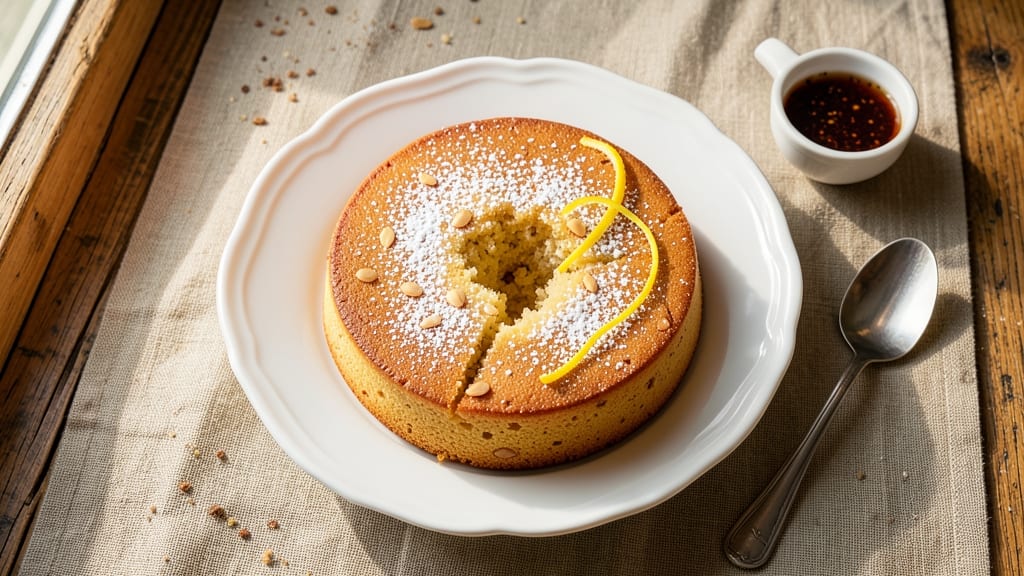
This almond sponge cake recipe UK delivers the perfect balance of delicate crumb and nutty richness—ideal for afternoon tea or special occasions. The secret lies in folding egg whites just right, creating those signature light-as-air layers that crumble effortlessly.
I've adapted this classic British recipe to highlight ground almonds and a touch of vanilla, ensuring every slice tastes like a proper bakery treat.
What sets this cake apart is its foolproof method: no electric mixer required, just careful folding to maintain airiness. The recipe uses metric measurements for precision, and baking at 160°C (320°F) ensures even cooking without overbrowning.
Ground almonds add texture and depth, while a simple lemon glaze elevates the finish to restaurant-quality.
The result is a cake that's moist yet tender, with a subtle crunch from the almonds and a delicate vanilla aroma. Perfectly paired with Earl Grey tea, it's the kind of dessert that feels both nostalgic and refined. Whether serving guests or treating yourself, this recipe delivers every time.
For extra indulgence, add a layer of marzipan or dust with icing sugar—classic British touches that make it even more special. Let's get baking!
Ingredients for almond sponge cake recipe uk
Classic British ingredients for a cake that's light, nutty, and perfect with tea.
| Ingredient | Amount | Notes |
|---|---|---|
| Ground Almonds 🥜 | 1 ½ cups | Finely ground for even texture |
| All-Purpose Flour 🌾 | 1 ½ cups | Sifted for lightness |
| Large Egg Whites 🥚 | 5 whole | Room temperature for stability |
| Granulated Sugar 🍚 | 1 ¼ cups | Superfine preferred for smoothness |
| Vanilla Extract 🌿 | 1 tbsp | Pure vanilla for authentic flavor |
| Unsalted Butter 🧈 | ½ cup | Softened, not melted |
| Lemon Zest 🍋 | 1 tbsp | Fresh, finely grated |
| Salt 🧂 | ¼ tsp | Fine sea salt preferred |
| Lemon Glaze Sugar 🍚 | ½ cup | For finishing (granulated sugar) |
| Lemon Juice 🍋 | 2 tbsp | Freshly squeezed |
| Powdered Sugar 🍚 | ¼ cup | For glaze |
Ground almonds are the heart of this recipe. Look for finely ground almonds—not almond flour, which is coarser. Waitrose or M&S carry excellent quality in the baking aisle, or grind your own for extra texture. The egg whites need to be at room temperature, so take them out 30 minutes before starting. For the butter, Plugrá or President brands work beautifully—avoid salted as it can alter the delicate balance. Sift the flour and almonds together to eliminate lumps and create a lighter crumb.
No superfine sugar? Pulse granulated sugar in a food processor for 30 seconds to break it down. Running short on vanilla? Almond extract at half the amount works in a pinch, though it has a stronger flavor. For the lemon zest, use a fine grater and avoid the white pith—it can make the cake bitter. The glaze can be made ahead and reheated gently if it thickens. If you prefer a marzipan layer, Doves Farm makes a lovely ready-made version that pairs perfectly with this cake.
Store the cake in an airtight container at room temperature for up to 3 days. For longer storage, wrap tightly in cling film and refrigerate for 1 week. The glaze will keep for 2 weeks in the fridge if stored separately. To serve, dust with icing sugar or add a dollop of clotted cream—classic British style. This cake reheats beautifully in the oven at 160°C (320°F) for 5 minutes if it's been refrigerated, restoring its light, airy texture.
Why You'll Love This Recipe
- No Whisk Required: I swear by this sponge—just fold those stiff egg whites into the dry mix, and boom, no overmixing, no dense crumb. The ground almonds give it that delicate crunch without extra effort.
- Vanilla-Almond Magic: That vanilla extract? It doesn’t just sit there—it blooms into this warm, nutty sweetness that feels like a hug. The almonds add a buttery richness without tasting like flour.
- Tea Time Star: Slice it thin and serve with Earl Grey or a splash of Baileys. Honestly, it’s my go-to for lazy Sundays or when I need a cake that’s fancy enough for guests but zero stress.
- Leftovers? Better Than Fresh: This cake actually improves after a day—moist but not soggy. I’ll wrap a slice in cling film and stash it for school lunches or a quick breakfast the next morning. No sad, dry crumbs here.
Step-by-step instructions for almond sponge cake
This method delivers perfectly light, airy layers every time with a delicate almond flavor.
Prepare the Egg White Mixture
Begin by separating the egg whites from yolks—you'll need all 5 whole egg whites for this recipe. Place them in a completely clean, grease-free mixing bowl. Add the 0.25 tsp salt and 1 tbsp lemon zest to the egg whites. I always use a digital scale to ensure precise measurements, especially with delicate components like egg whites.
Using an electric mixer, beat the egg whites on medium speed until they form soft peaks. Gradually add the 1.25 cups granulated sugar while continuing to beat on high speed until the mixture is glossy and holds stiff peaks when the beaters are lifted. This process should take about 5-7 minutes—the sugar will dissolve completely, creating a smooth, stable meringue.
Here's the thing—don't rush this step. The sugar needs time to fully incorporate, and the meringue must be completely stable before folding in other ingredients. If you see any graininess, whip for another minute. The final mixture should be thick enough to hold its shape when the beaters are tilted.
Combine Dry Ingredients and Fold
In a separate bowl, whisk together the 1.5 cups all-purpose flour and 1.5 cups ground almonds until evenly combined. Sift the mixture through a fine-mesh sieve directly into the meringue bowl to aerate the dry ingredients and prevent lumps. This step is crucial for maintaining the cake's light texture.
Using a spatula, gently fold one-third of the flour-almond mixture into the meringue until just combined. Then fold in another third, being careful not to deflate the meringue. The final third should be folded in last to maintain maximum air incorporation. Work quickly but deliberately—you want to maintain as much air as possible while ensuring all dry ingredients are evenly distributed.
I like to use the "J" technique for folding: scrape down the sides of the bowl with the spatula, then cut through the center of the mixture and fold it over itself. Repeat this motion until the batter is smooth and no dry streaks remain. The batter should be thick but still pourable—if it's too stiff, you may have overmixed.
Add Butter and Vanilla
Add the 0.5 cup softened unsalted butter and 1 tbsp vanilla extract to the batter. Using a spatula, gently fold these ingredients into the mixture until fully incorporated. The butter should melt slightly from the warmth of the egg mixture, creating a smooth, cohesive batter.
This is where the cake's richness comes from, but be careful not to overmix. The butter should be fully combined but the batter should still maintain its airy texture. If you notice the batter starting to deflate significantly, stop folding immediately. At this stage, the batter should resemble thick cake batter with a slightly marbled appearance from the butter.
Let the batter rest for 10 minutes at room temperature. This brief rest allows the flour to fully hydrate and the gluten to relax slightly, which helps prevent dense layers. Don't skip this step—it makes a noticeable difference in the final texture.
Bake the Layers
Preheat your oven to 350°F and prepare three 6-inch round cake pans by lining the bottoms with parchment paper circles. Divide the batter evenly among the pans, smoothing the tops with a spatula. The batter should fill each pan about two-thirds full—don't overfill or the cakes will overflow.
Bake for 18-20 minutes or until the tops spring back when gently touched and a toothpick inserted comes out clean. The edges should be lightly golden but the centers should remain pale. Rotate the pans halfway through baking for even heat distribution. I always check for doneness at the 18-minute mark—oven temperatures can vary.
Remove the cakes from the oven and let them cool in the pans for 5 minutes. Then carefully transfer them to a wire rack to cool completely. This gradual cooling prevents the cakes from cracking. While they cool, prepare your lemon glaze by mixing the 0.5 cup lemon glaze sugar, 2 tbsp lemon juice, and 0.25 cup powdered sugar until smooth.
Pro Tips For Making Almond Sponge Cake Recipe Uk
- Sift the Almonds First: I learned this the hard way—skipping this step means lumpy cake. Pulse ground almonds in a food processor for 30 seconds after measuring to break up any clumps, then sift them with the flour. This ensures a silky texture, not a gritty one.
- Whip Egg Whites to Stiff Peaks: Cold, grease-free bowl. Room-temperature egg whites. Electric mixer on high until the peaks hold permanently when you lift the beaters. No wobbly peaks—this is your sponge’s backbone. (Yes, even if you’re impatient like me.)
- Don’t Overmix the Batter: Fold in the egg whites in three additions, using a spatula to cut through the center and gently lift. Overmixing deflates the air you just whipped into those whites, and you’ll end up with a dense brick instead of a light cake. Less is more here.
- Bake Until Springy: Tap the top of the cake—it should spring back immediately when you press it. My first batch came out gummy because I pulled it at 150°C (300°F) instead of waiting for the center to pass the toothpick test (clean, not wet). Patience here keeps it moist, not soggy.
Wine and beer pairings for these flavors
Classic British Wines
An Earl Grey tea pairing is traditional, but for wine lovers, a crisp English sparkling wine like Nyetimber's Classic Cuvée complements the cake's almond notes beautifully. The delicate bubbles and citrus undertones mirror the lemon glaze, while the slight effervescence cleanses the palate between bites. 🍷
For a richer pairing, try a dry Riesling from England's Chapman Freeborn—its bright acidity and stone fruit flavors balance the cake's sweetness and nutty depth. Serve slightly chilled (45-50°F) to enhance the wine's refreshing qualities.
Light Beer Options
A pale ale with subtle citrus notes works surprisingly well—look for UK craft beers like Camden Town Brewery's Hells Lager or Beavertown's Gamma Ray. The hoppy bitterness cuts through the cake's richness while the malt sweetness harmonizes with the almond flavor.
For a lighter option, a wheat beer like Thornbridge's Hop Back offers a floral, slightly tangy profile that pairs wonderfully with the lemon glaze. Serve at 40-45°F to preserve its crispness.
Non-Alcoholic Pairings
For a tea lover's experience, English breakfast tea with a splash of milk is the quintessential pairing—its malty depth contrasts the cake's delicate texture. Add a slice of clotted cream for an authentic afternoon tea touch.
For a modern twist, try sparkling elderflower lemonade—mix 1 cup sparkling water, 2 tbsp elderflower syrup (like Monin), and 1 tbsp lemon juice. The floral notes echo the vanilla, while the effervescence mirrors the cake's airy layers. ✨
Seasonal Variations
In summer, a rosé wine with its berry undertones pairs beautifully with the cake's almond and citrus flavors. Opt for a Provençal rosé like Whispering Angel—its crisp acidity and red fruit notes complement the lemon glaze.
For autumn, a dry cider like Thatchers Vintage adds a crisp, slightly tart contrast. The apple notes harmonize with the almond, while the effervescence keeps the palate fresh.
Nutrition facts
Frequently asked questions
Can I substitute almond flour for ground almonds in this recipe?
Ground almonds work best here because they're finer and create a smoother texture. Almond flour is coarser and may make your cake denser. If you must substitute, pulse almond flour in a food processor for 1 minute to break it down, but expect a slightly different crumb texture. For the most authentic result, stick with finely ground almonds from brands like Waitrose or M&S.
Why does my almond sponge cake turn out dense instead of light?
Overmixing the batter is the most common cause—it deflates the air incorporated in the egg whites. Another issue could be underbaking or opening the oven too soon. Always bake until a toothpick comes out clean, and let cakes cool completely in the pan before removing. Also ensure your egg whites are fully stiff before folding in dry ingredients.
How do I make this cake gluten-free?
Replace the all-purpose flour with a 1:1 gluten-free baking flour blend** (like Doves Farm or Schär). You may need to add 1 tsp xanthan gum to improve texture. For ground almonds, use certified gluten-free almonds. Note that gluten-free versions often require slightly longer baking times (22-25 minutes) and may need a toothpick test for doneness.
Can I bake this cake in a different shape or size?
Yes! For a single layer, use an 8-inch round pan and reduce baking time to 15-18 minutes. For a loaf pan, bake at 160°C (320°F) for 30-35 minutes. The key is adjusting for volume—never fill pans more than two-thirds full. If changing dimensions, reduce baking time by about 2-3 minutes per inch of thickness. Always check with a toothpick!
What's the best way to store leftovers?
Keep the cake in an airtight container at room temperature for up to 3 days. For longer storage, wrap tightly in cling film and refrigerate for 1 week. The lemon glaze can be made ahead and stored separately in the fridge for 2 weeks. To revive stale cake, warm it in the oven at 160°C (320°F) for 5 minutes—it'll taste fresh again!