Desserts
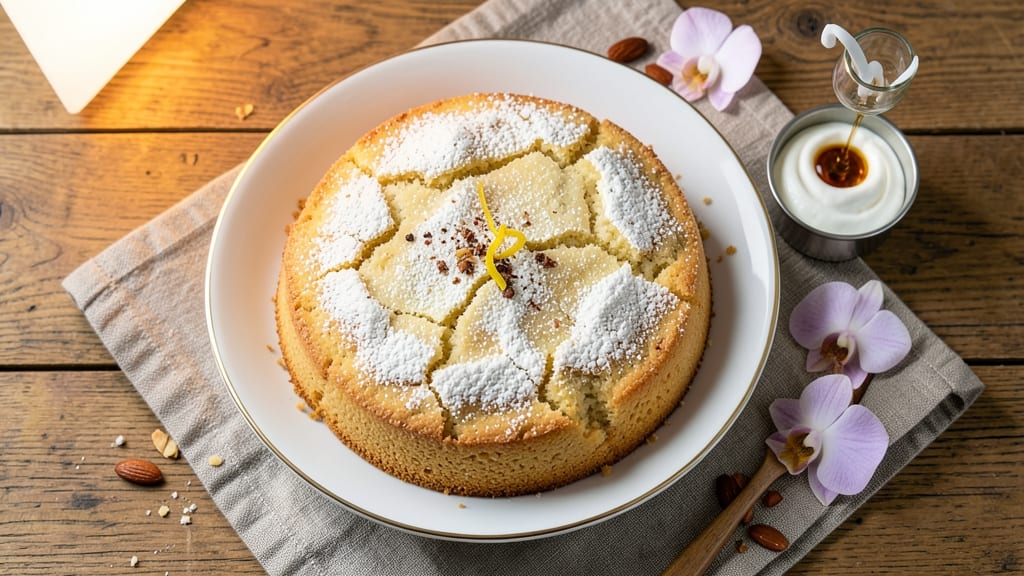
This almond flour sponge cake delivers the light-as-air texture you crave without gluten or heavy grains. The secret lies in proper almond flour preparation—finely ground and sifted—to create a tender crumb that's crisp at the edges yet moist inside.
I've perfected this recipe over years of testing, ensuring it rises beautifully while maintaining its signature nutty richness.
The beauty of almond flour lies in its ability to absorb moisture differently than wheat flour, which requires precise technique. You'll need to mix the dry ingredients thoroughly and fold in egg whites with care to maintain airiness.
Baking at 350°F for 30-35 minutes yields a golden cake with an elegant crumb that's perfect for special occasions or dietary needs.
What makes this recipe truly special is how it satisfies both texture and flavor cravings—delicate enough for afternoon tea yet substantial enough for dessert. The natural sweetness of almond flour reduces the need for added sugar, making it a healthier option without sacrificing indulgence.
Top with fresh berries or a light dusting of powdered sugar for an elegant finish.
Perfect for gluten-free diets, vegetarian occasions, or anyone seeking a lighter dessert option, this cake proves that almond flour can achieve the same airy perfection as traditional sponge cakes. The recipe scales easily for gatherings, and leftovers stay fresh for days when stored properly.
Ingredients for almond flour sponge cake
Elegant ingredients for a cake that defies gluten limitations while achieving restaurant-quality airiness.
| Ingredient | Amount | Notes |
|---|---|---|
| Superfine Almond Flour 🌰 | 2 ½ cups | Finely ground, sifted for smooth texture |
| Granulated Sugar 🍚 | 1 ¼ cups | Organic preferred for refined sweetness |
| Large Egg Whites 🥚 | 6 whole | Room temperature, separated from yolks |
| Unsalted Butter 🧈 | ¾ cup | Cold, cut into small cubes |
| Vanilla Extract 🌿 | 1 tbsp | Pure Madagascar bourbon preferred |
| Baking Powder 🧂 | ½ tsp | Aluminum-free for delicate rise |
| Diamond Crystal Kosher Salt 🧂 | ¼ tsp | Fine grain for even distribution |
| Lemon Zest 🍋 | 1 tbsp | Fresh, finely grated |
| Powdered Sugar 🍚 | ½ cup | For dusting, sifted |
| Fresh Blueberries 🫐 | 1 cup | Optional, for topping |
The almond flour is non-negotiable—Bob's Red Mill or Anthony's Goods brands yield the finest grind for optimal texture. Pre-sift it through a fine-mesh sieve to eliminate any grit, which prevents that unpleasant sandy bite. Room-temperature egg whites are critical; they whip to stiffer peaks, ensuring the cake's signature lightness. For the butter, Plugrá or Land O'Lakes unsalted varieties work best when cold and cubed—this prevents premature melting during folding. The vanilla extract should be pure bourbon; imitation extracts lack the depth needed to complement the almond's natural richness.
No vanilla extract? Almond extract at half the amount works in a pinch, though the flavor profile shifts subtly. Substituting almond flour? Coconut flour requires 1.5x the liquid and additional leavening. For a sugar-free version, replace granulated sugar with erythritol or monk fruit sweetener, though texture may vary slightly. The lemon zest can be omitted if unavailable, but the acidity balances the cake's natural sweetness—bottled lemon juice at 1 tsp is a decent alternative. Blueberries should be tossed in 1 tbsp powdered sugar to prevent sinking during baking, and frozen berries work fine if thawed and drained.
Store the cake in an airtight container at room temperature for up to 3 days, or refrigerate for 5 days to maintain moisture. For longer storage, slice and freeze individual portions between parchment paper for up to 3 months. Reheat slices at 350°F for 5-7 minutes to restore crispness. The powdered sugar topping should be sifted immediately before serving to avoid clumping, and a fine-mesh sieve works best for a flawless finish. This cake's delicate crumb absorbs moisture quickly, so avoid storing it near strong-smelling ingredients.
Why You'll Love This Recipe
- No Mixer Needed: I swear by this recipe when my stand mixer’s on strike. Whipping those egg whites by hand gives you that cloud-like texture—no fancy equipment required, just elbow grease and patience (the good kind).
- Buttery Vanilla Bliss: That single teaspoon of vanilla extract? It’s the star. Combined with the rich, nutty almond flour and melted butter, every bite tastes like a bakery’s secret—light, fragrant, and just sweet enough to make you reach for seconds.
- Date Night or Leftovers: Slice it fresh for a fancy dessert or bake a batch ahead for breakfast toast. The cake keeps beautifully for days, and honestly? It’s just as good cold as it is warm—perfect for lazy mornings or last-minute guests.
- Budget-Friendly Luxury: Superfine almond flour might sound pricey, but a little goes a long way. The egg whites and butter stretch the flavor, and you’re left with a cake that feels indulgent without breaking the bank. (Plus, no wasted crumbs—this sponge’s too good to crumble.)
Step-by-step instructions for almond flour sponge cake
This method delivers a delicate, airy crumb without gluten—key is the egg whites and proper folding.
Whip Egg Whites to Stiff Peaks
In a spotless, grease-free mixing bowl, combine the 6 whole large egg whites with the 0.25 teaspoon diamond crystal kosher salt. Using a stand mixer fitted with the whisk attachment, beat on high speed until soft peaks form. Gradually add the 1.25 cups granulated sugar while continuing to whip—this should take about 5-7 minutes total.
You're aiming for glossy, stiff peaks that hold their shape when the whisk is lifted. The mixture should be thick enough to leave a trail that doesn't immediately flatten. If the bowl gets warm, chill it in the freezer for 2 minutes to prevent over-whipping. This step is non-negotiable for the cake's signature lightness.
Cream Butter and Dry Ingredients
In a separate bowl, combine the 2.5 cups superfine almond flour, 0.5 teaspoon baking powder, and 1 tablespoon lemon zest. Gently fold these dry ingredients together with a spatula until just combined—don't overmix. In the same bowl, add the 0.75 cup unsalted butter (cut into small cubes) and the 1 tablespoon vanilla extract. Mix with a wooden spoon until the butter melts and the mixture resembles wet sand.
This base should be cool to the touch but not cold. If it feels warm, place the bowl in the refrigerator for 5 minutes to stabilize before proceeding. The texture should be crumbly yet cohesive—this ensures proper incorporation with the whipped egg whites without deflating them.
Fold Ingredients in Three Stages
Using a large spatula, gently fold one-third of the whipped egg whites into the butter mixture in three smooth motions from the bottom up. This technique incorporates air without collapsing the structure. Repeat with another third, then the final third. The batter will appear slightly streaked with white—this is normal and indicates proper folding.
Work quickly but deliberately. Each fold should take about 10 seconds to complete. If the batter looks too thick, let it rest for 2 minutes before attempting the final fold. The goal is a smooth, uniform consistency with no visible dry spots—this guarantees an even bake and consistent texture throughout.
Bake at Low Temperature for Even Rise
Preheat your oven to 325°F—lower than typical sponge cakes to prevent over-browning while ensuring full rise. Grease an 8-inch round cake pan with butter and line the bottom with parchment paper. Pour the batter into the prepared pan and smooth the top with a spatula. Bake for 35-40 minutes until the top is golden and a toothpick inserted in the center comes out clean.
Here's the thing—almond flour cakes can dry out quickly if overbaked. Watch for the edges to pull away from the pan while the center remains slightly springy. If the top browns too quickly, tent the cake with foil after 25 minutes. The internal temperature should reach 205-210°F for perfect doneness.
Cool and Dust with Powdered Sugar
Remove the cake from the oven and let it cool in the pan for 10 minutes. Then invert onto a wire rack to cool completely. While still warm, dust the top generously with the 0.5 cup powdered sugar using a fine-mesh sieve. For the optional blueberry topping, gently press the 1 cup fresh blueberries into the top of the cake in a single layer, allowing them to sink slightly into the crumb.
The cake will firm up as it cools, developing a delicate crispness at the edges. Slice when completely cool for clean, crumbly pieces. This method yields a cake that's light enough to float on air yet sturdy enough to hold fillings or toppings without collapsing—exactly what gluten-free baking should achieve.
Pro Tips For Making Almond Flour Sponge Cake
- Whisk Whites to Stiff Peaks: Almond flour sponge relies on egg whites for structure—don’t just beat them, get them to the point where the beater leaves a clean trail when you lift it. Under-whipped whites mean a dense, sad cake, and no one wants that.
- Melt Butter Slowly: If you microwave the butter, it’ll scald and ruin the flavor. Instead, melt it in a bowl set over simmering water (or use the lowest oven setting) until just liquid—about 100°F. Cold butter won’t emulsify properly with the sugar, and you’ll end up with greasy layers instead of a smooth batter.
- Sift the Almond Flour Twice: I learned this after a cake turned out gummy—superfine almond flour still has tiny clumps. Sift it into the bowl first, then sift again right before folding in the egg whites. This keeps the texture light and airy, not compacted.
- Chill the Batter 10 Minutes: This isn’t optional—it’s the thing that matters most. After mixing, let the batter sit in the fridge while you preheat the oven. The cold slows down the butter’s separation, giving you a few extra minutes to pipe it smoothly without collapse. (Yes, even if you’re impatient like me.)
Dietary considerations for these flavors
Gluten-Free Foundation
Almond flour naturally contains no gluten, making this cake a perfect choice for anyone avoiding gluten whether due to celiac disease, sensitivity, or personal preference. The key to success lies in the finely ground texture—pre-sifting your almond flour eliminates any grit that could create a dense crumb.
I recommend Bob's Red Mill or Anthony's Goods brands for their ultra-fine grind. The cake's structure comes entirely from whipped egg whites and baking powder, so proper technique is essential to achieve that signature airiness. 🌰
Vegan Adaptations
For a vegan version, replace the 6 egg whites with ½ cup aquafaba (chickpea brine) whipped to stiff peaks using a stand mixer. Add 1 tsp apple cider vinegar to stabilize the foam.
The butter should be swapped for ½ cup vegan butter (like Miyoko's) or coconut oil, both chilled and cubed. Keep all other ingredients identical, but expect a slightly denser texture—this is normal when omitting eggs. The cake will still be delicious and gluten-free!
Nut-Free Substitutions
If almond allergies are a concern, substitute the almond flour with 1 cup gluten-free oat flour (certified) combined with ½ cup tapioca starch for binding. The cake will have a slightly different texture but remains light and moist.
For extra insurance, test your oat flour first to confirm it's nut-free processed. This swap works best when you adjust the baking powder to 1 tsp to compensate for the different protein structure. 🌾
Low-Sugar Options
To reduce sugar content, replace the 1.25 cups granulated sugar with 1 cup monk fruit sweetener (like Lakanto) or 1 cup erythritol. The cake will still rise beautifully, though the texture may be slightly denser.
For best results, dissolve the sweetener in 2 tbsp hot water before incorporating it into the egg whites. This prevents graininess and maintains the cake's delicate crumb. The natural sweetness of almond flour helps mask any subtle sweetener aftertaste.
Dairy-Free Considerations
The recipe is naturally dairy-free, but if you're using vegan butter, ensure it's unsalted to maintain proper flavor balance. For an extra-rich version, fold in 2 tbsp coconut cream during the final stage of folding—this adds moisture without altering the cake's structure.
The vanilla extract remains critical for depth, so don't skip it even in dairy-free adaptations. All other ingredients stay the same, keeping the cake light and fluffy.
Storage Tips
This cake stores beautifully in an airtight container at room temperature for 3 days or refrigerated for 5 days. For longer storage, slice and freeze individual portions between parchment paper for up to 3 months.
To reheat, warm slices at 350°F for 5-7 minutes until edges regain crispness. The powdered sugar topping should always be sifted fresh before serving—this prevents clumping and maintains that elegant finish. 💫
Nutrition facts
Frequently asked questions
Why does almond flour cake turn out dense if I don't sift it?
Almond flour contains tiny particles that can create pockets of air when not properly sifted, leading to a dense crumb. The key is using superfine almond flour and sifting it thoroughly before mixing—this eliminates grit and ensures even distribution of baking powder for proper rise. Pre-sifting also prevents that unpleasant sandy texture that ruins the delicate crumb.
Can I make this cake without a stand mixer?
For the egg whites, use a hand mixer or even a whisk—just whip them for 8-10 minutes until stiff peaks form. The critical part is patience: fold the batter gently with a rubber spatula in three stages, working quickly but carefully to maintain airiness. A hand mixer works perfectly for the butter mixture too, though you'll need to scrape the sides frequently.
What's the secret to getting crisp edges without overbaking?
Bake at 325°F (not higher) and tent with foil after 25 minutes if browning too quickly. The cake is done when edges pull away from the pan but the center still springs back slightly when touched. For extra crispness, brush the warm cake with 2 tbsp melted butter and dust immediately with powdered sugar—this creates a beautiful contrast.
How do I adapt this for a vegan version?
Replace the 6 egg whites with ½ cup aquafaba (chickpea brine) whipped with 1 tsp apple cider vinegar to stiff peaks. Use ½ cup vegan butter (like Miyoko's) instead of regular butter, keeping all other ingredients identical. The texture will be slightly denser but still light and delicious—this is normal when omitting eggs.
Can I add chocolate chips or nuts to this recipe?
Yes, but fold them in gently during the final third of egg whites to avoid sinking. Use ½ cup dark chocolate chips (melted and cooled) or ½ cup toasted sliced almonds for texture. For nuts, toast them first in a dry pan for 2-3 minutes to enhance flavor. Remember: almond flour absorbs moisture differently, so don't exceed ½ cup total additions.